What to see
When is the Bund least crowded?
The quietest hour is early morning, when locals are out exercising and the promenade is close to empty, though the historic facades are flat in that light and the lights across the river have already gone off. The busiest hour is the one after sunset, when the skyline lights come on and the crowd peaks at the same moment, with weekends and public holidays worse still. Fewest people and best light are not the same answer; confirm the day's lighting and event schedule before you go.
Last updated3 min read
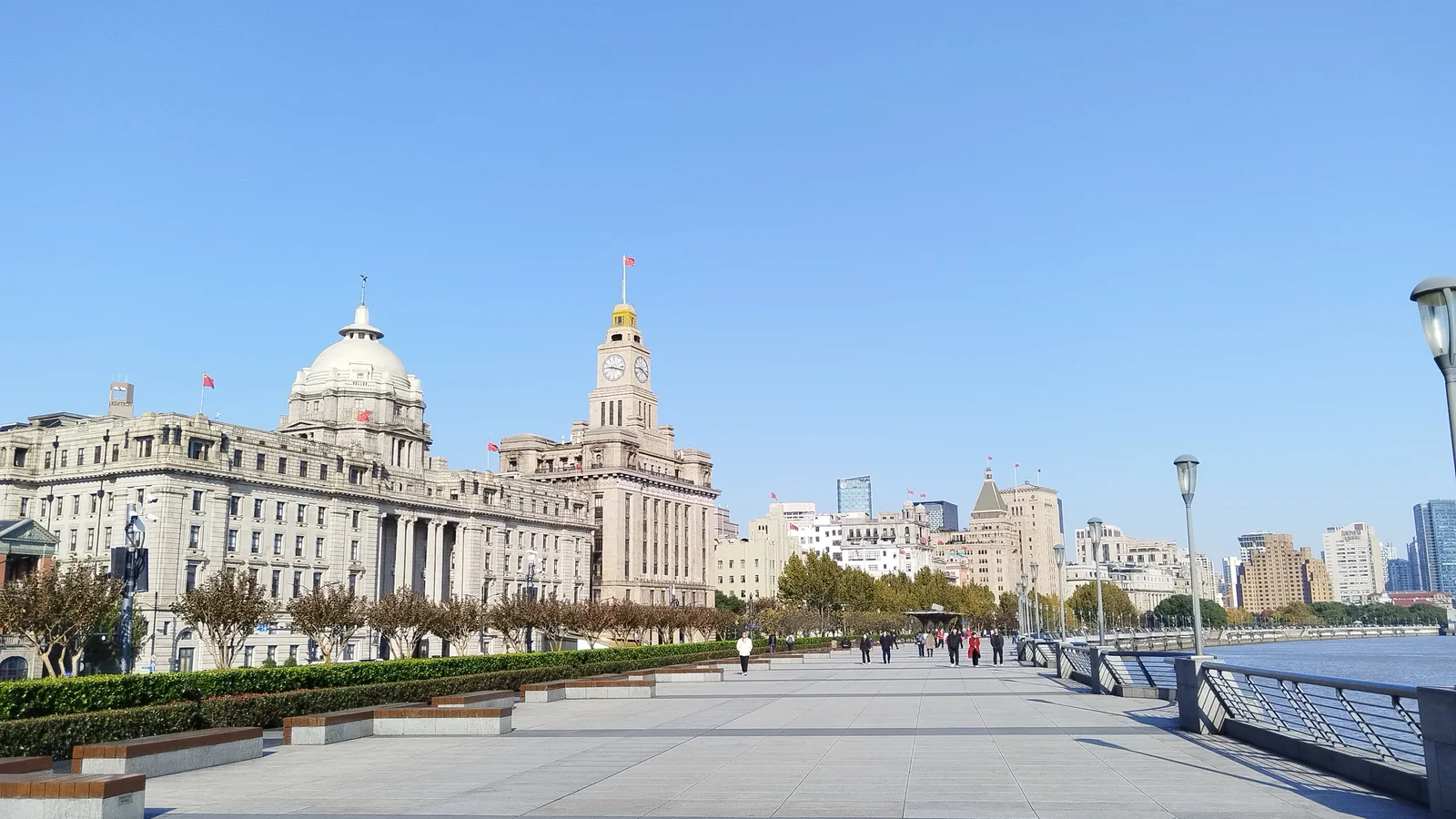
The Bund has no ticket and no closing time, so “least crowded” is a question about the hour, and the crowd follows a consistent pattern. Lighting hours and one-off events change, so treat no time as fixed.
Through the day and into the night
Early morning is the quietest stretch of the day, and it belongs to locals exercising, running and practising tai chi. The promenade is close to empty, the best time to walk its full length and photograph it empty. The trade-off is light: the sun is low, the historic facades read flat, and the lights on the far bank are long off.
Later in the morning tour groups and independent visitors arrive, a moderate level at which you can still walk; through the afternoon the numbers climb and the promenade starts to require stepping aside.
The hour after sunset is the peak of the day. The skyline lights come on one building at a time, and since this is the sight most people came for, they all arrive in the same hour. The viewing platform and the stretch opposite the far bank are the hardest to walk; on public holidays the promenade runs one-way crowd control and parts of the platform may close.
Later still the crowd thins out, though the lighting may dim or be reduced, so check on the day. “Fewest people” and “best lights” do not coincide.
The worst days of the week and the year
Weekends are busier than weekdays all day, clearly so in the evening. Public holidays step up again: early October and Lunar New Year are the heaviest of the year, and travel, accommodation and the promenade all feel it. Those are not days to schedule tightly.
Which stretch is worst, and which way to walk
The worst of it is the section directly facing Lujiazui, and the viewing platform itself, because that is where most people stop to look across the river. To escape it, walk away along the promenade: north towards Waibaidu Bridge, or south towards the old docks around Yan’an East Road. A few hundred metres either way thins the crowd noticeably. Photographers hold one stretch for a long time, so moving along beats waiting.
The practical consequences are specific: at the narrowest points you cannot walk or turn back, strangers are hard to keep out of a photograph, and after sunset taxis and ride-hailing are hard to get.
A first visit and a photographer need different answers
For a first visit, the practical plan is to walk the Bund twice: once in the early morning for the promenade and the historic buildings, with empty frames, and once in the evening for the lights. With only one chance, get onto the embankment half an hour before sunset, look at the historic buildings first, then wait for the far bank to light up, accepting the busiest hour of the day.
A photographer is answering a different question. Fewest people is early morning; best light is the raking light before sunset and the blue hour after it, and the peak crowd falls in that window. The blue hour lasts about a quarter of an hour and shifts with the season, so check the day’s sunset and work back from it. For empty frames, arrive early.