What to see
Columbia Circle review: who it is for
Columbia Circle reviewed: a low-rise campus that suits anyone happy to spend an unhurried hour or two, and does not repay a special trip for a visitor with two days in Shanghai, an appetite for raw old factory fabric, or an expectation of exhibitions and interpretation.
Last updated5 min read
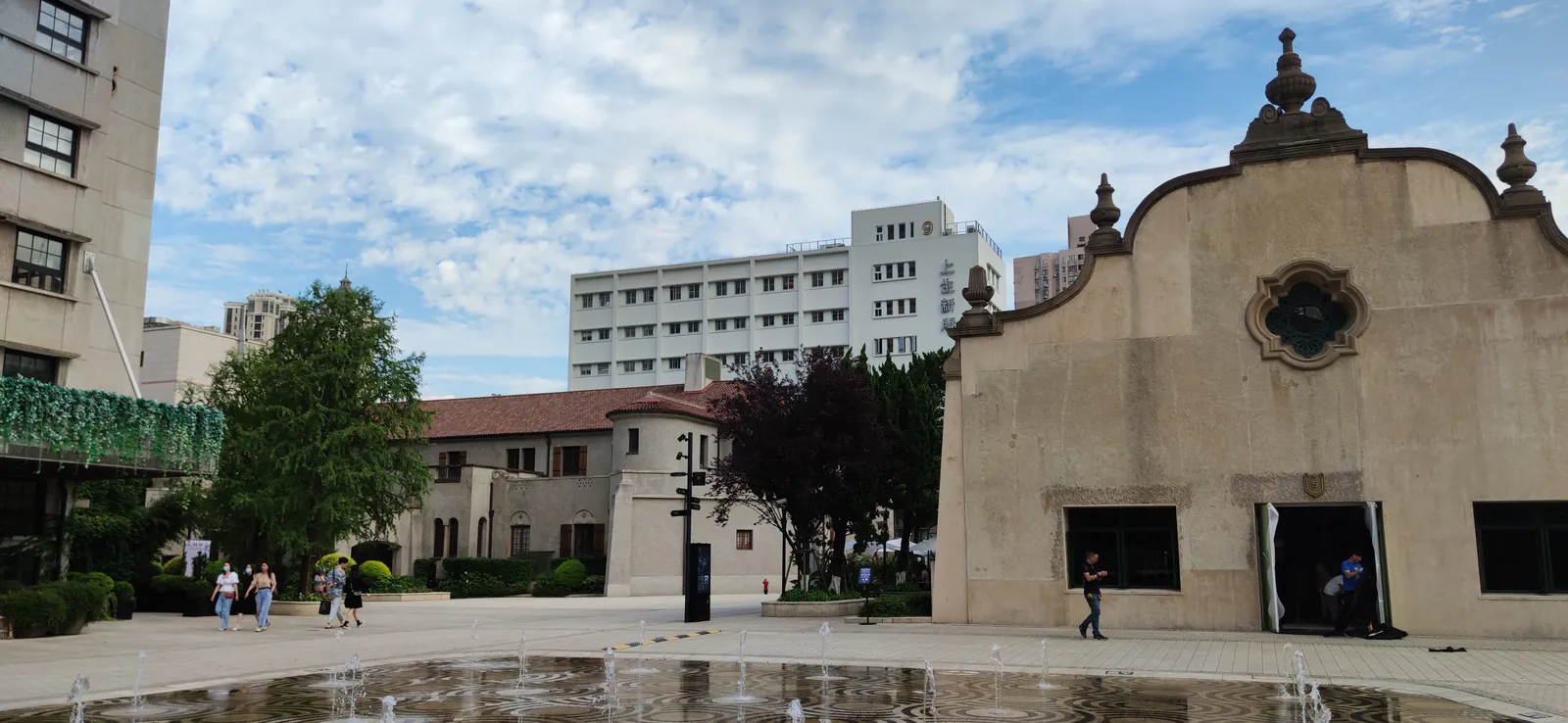
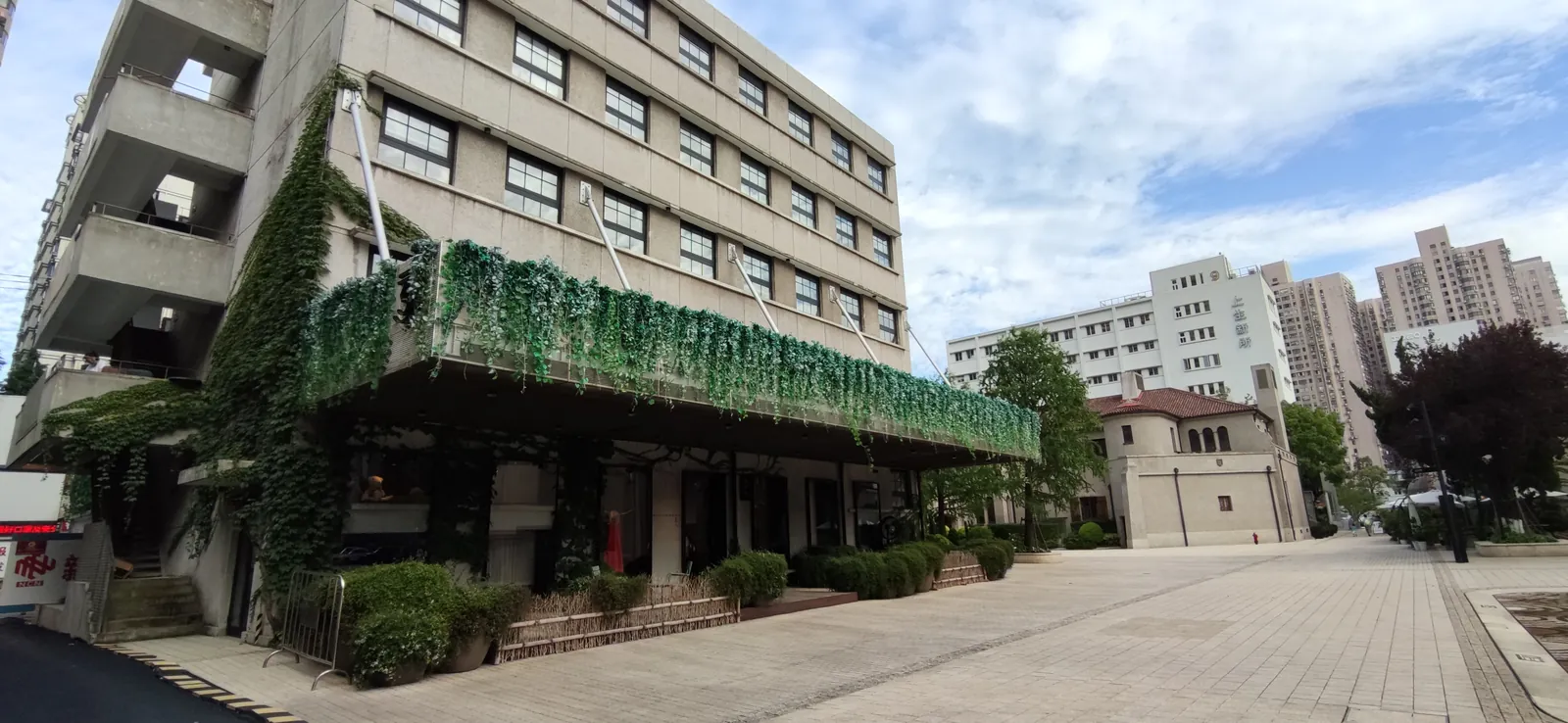
Columbia Circle is in Changning, between Yan’an West Road and Panyu Road and Anxi Road. It rests on two layers: garden buildings of an expatriate American country club of the 1920s and 1930s, and the laboratories, workshops and offices that a research and production institution added from the 1950s onwards. Updated in recent years, with several new blocks to the south, it now reads as one low-rise campus you can walk through freely.
The verdict first: somewhere to linger, not something to see
It is worth coming to, but what it is worth is a stretch of unhurried time rather than an object you must see. There is no ticket window, no route strung from point to point and nothing you must see. What you do is plain: walk, look at buildings, sit for a while, drink something, take in an exhibition along the way, and leave. By that standard it does well; by the standard of a special trip to see something, it falls short.
Who it suits, and who it does not
It suits five kinds of visitor. Anyone who wants an unhurried hour or two, which is the correct use of the place: walk a loop, look at the facades, find somewhere to sit. Anyone interested in architecture and urban renewal. Anyone who wants to sit with a coffee somewhere green. Families with small children: the space is open and level, with water and grass, so children can run and adults can keep track of them. And anyone already staying nearby, for whom this is everyday rather than an itinerary stop.
It does not suit four others. Anyone with two days in Shanghai and a list: an afternoon spent here is an afternoon not spent somewhere with real weight. Anyone expecting a museum, or a historic site with interpretation, a route and displays, none of which is here. Anyone looking for the original fabric of an old factory: the squares, water, misted garden and roof terraces are all new, and the industrial traces have been restored very thin. And anyone who wants the feel of ordinary city life — everything inside has been maintained and arranged, and the ordinary city is outside, on the pavements of Panyu Road and Xinhua Road.
Honestly: commercial property, thin explanation, and a visit that depends on the day
First, this is commercial property, not a public cultural institution, and the leasing is curated: restaurants, retail, exhibition spaces and a bookshop in a deliberate mix. The consequence is direct — which buildings you can enter and which places are trading depends on the leasing and on the day, which is also why this piece names no shops, no prices and no hours. Second, the historic layer is real but very thinly explained: from country club to closed research and production compound, the thread is legible in the buildings and almost nowhere stated on site. Third, the experience depends heavily on what happens to be open: exhibitions, markets and performances rotate by season, some spaces stay shut from year to year, and you may arrive on an afternoon when nothing at all is on.
The water, the buildings, and whether to cross the city
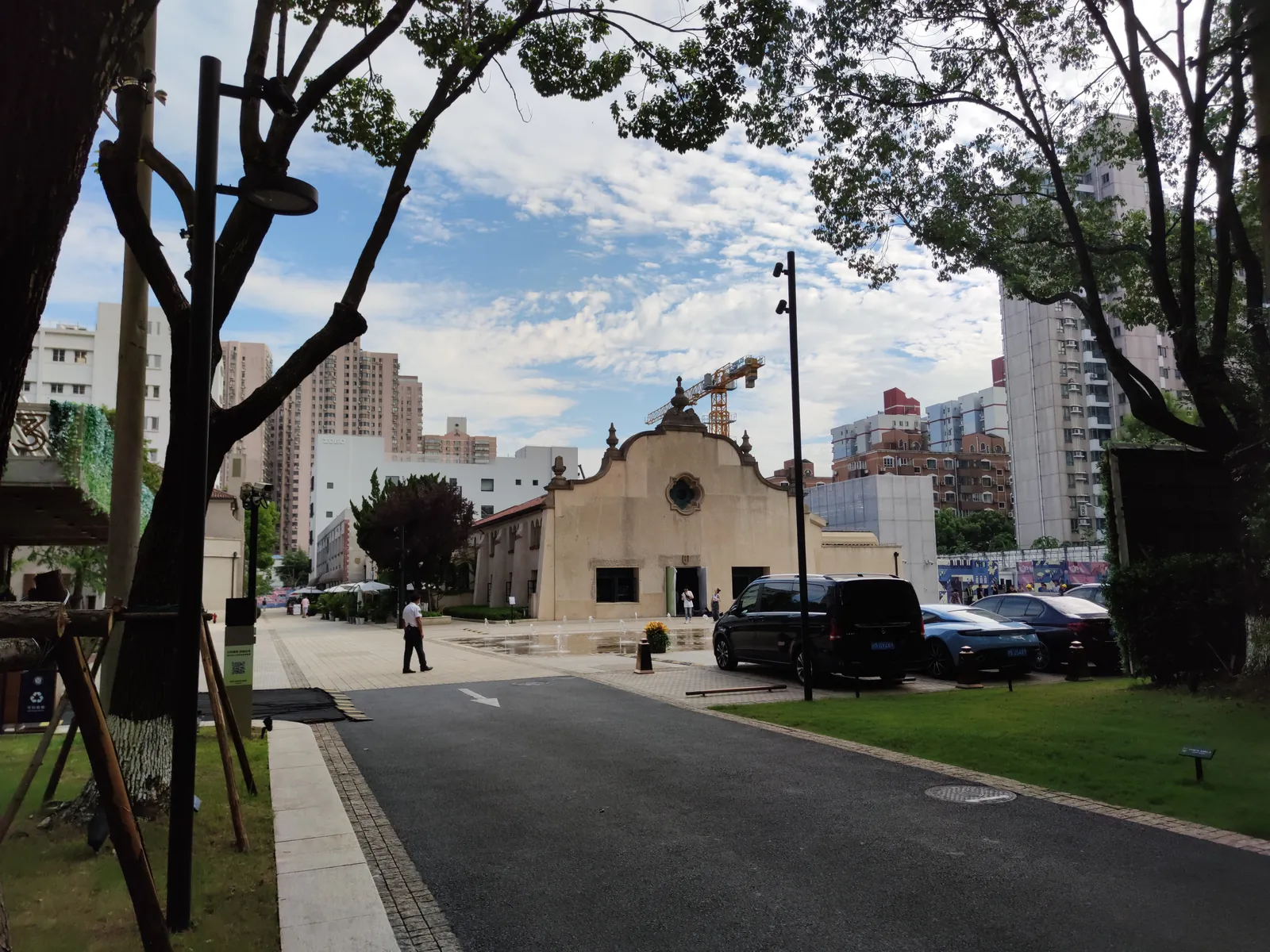
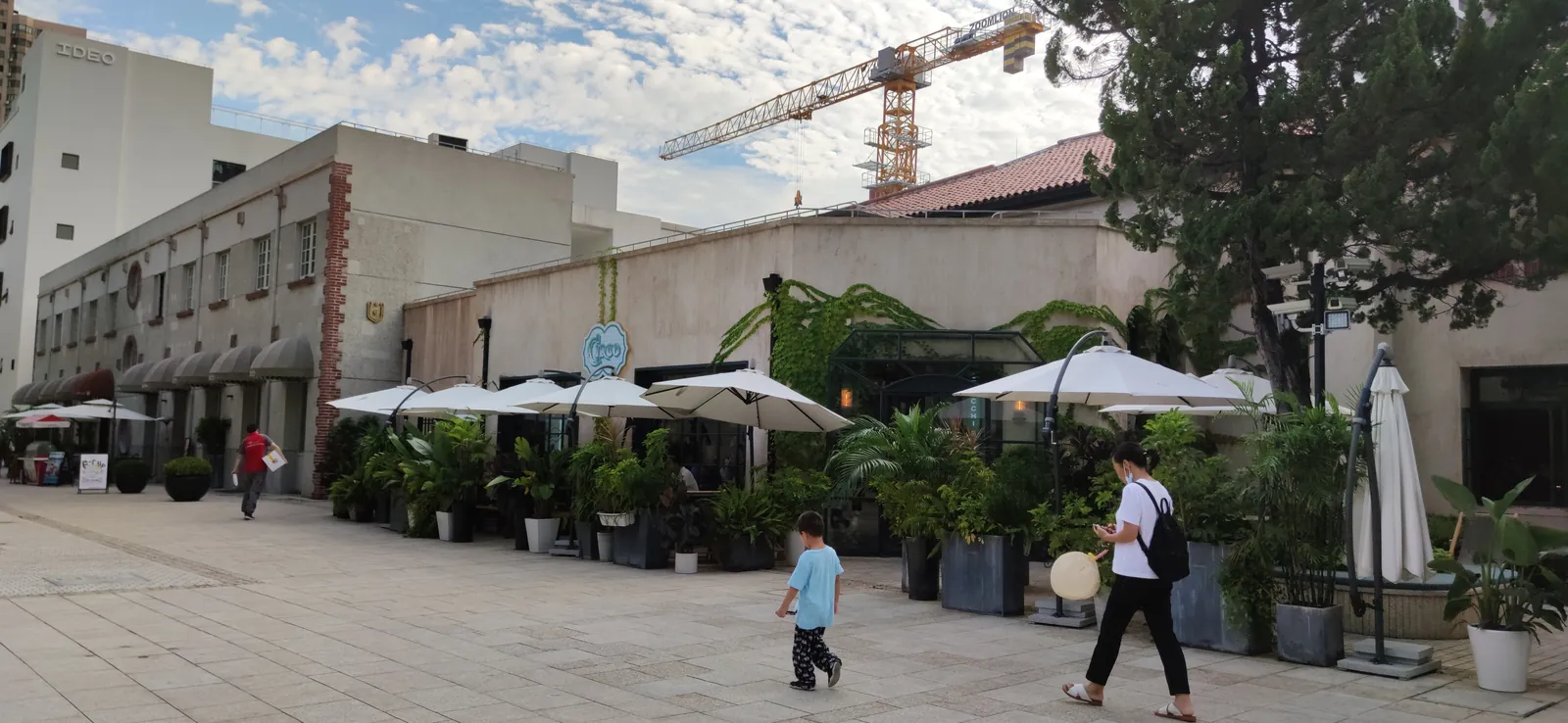
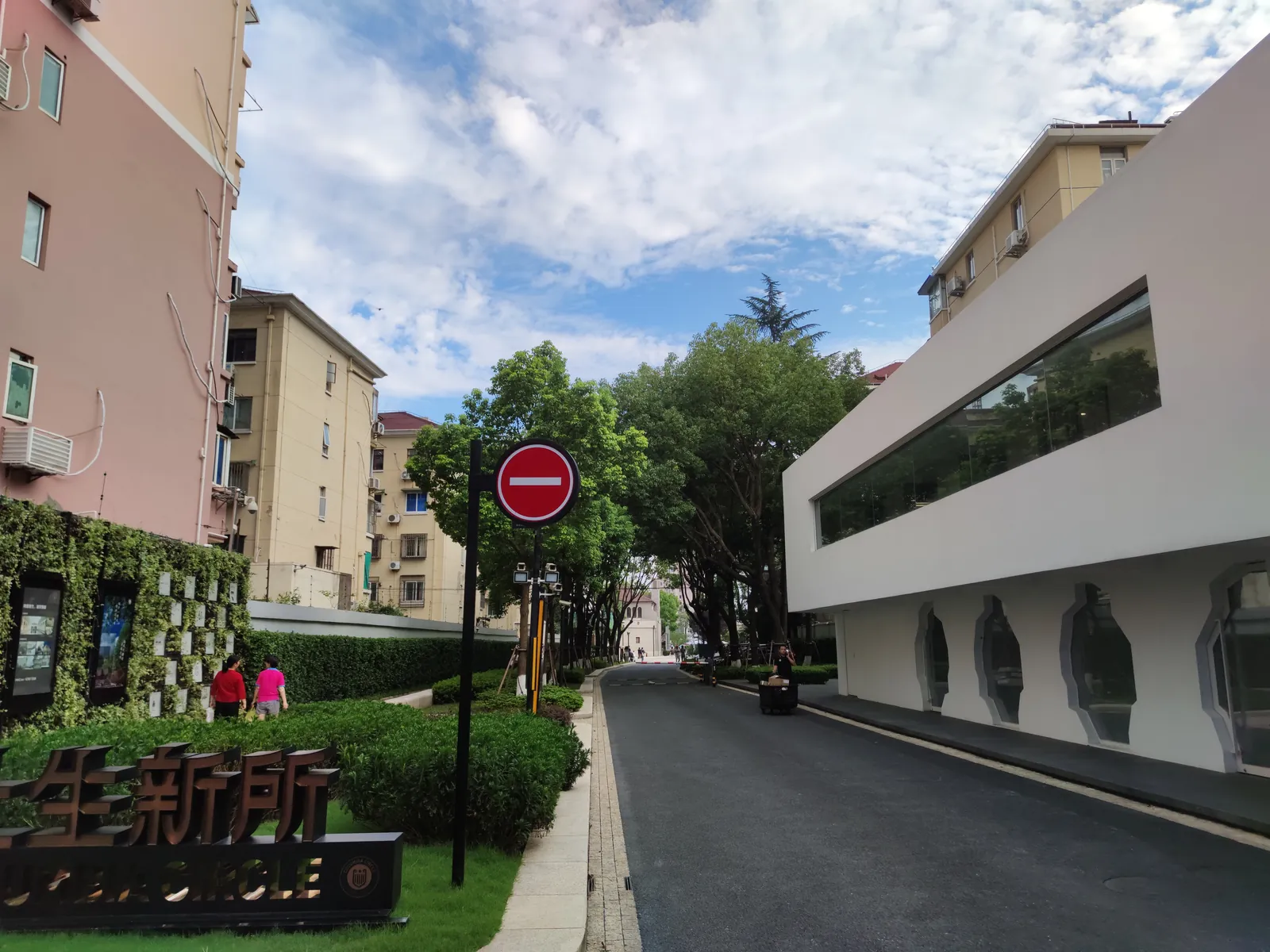
The water is shallow pools, small jets and reflections, made for walking past and sitting beside, not for making a journey to see; it looks good and it holds the square up, but it is not a spectacle. The buildings are the substance, and what can be confirmed is type and detail: the cream rendered gable with its curved outline, finial and quatrefoil window; the range under dark red pantiles with a round tower at its corner; the new white blocks against the old houses, separated by one long horizontal glazed opening. These are setting, not landmark — atmosphere and photographs, not the singularity that makes a cross-city trip for one look. Together they will carry a two-hour stop on the way to somewhere else; they will not carry a journey of their own.
Whether it is worth it depends on where you are. On the western side, walking the plane-tree streets around Xinhua Road and Panyu Road, come in: the detour costs almost nothing. Staying at the other end of the city, with a deliberate journey each way, do the arithmetic — an hour or two on site against over an hour of travel, an equation that works only if you use the surrounding area at the same time. What pairs with it is the street walk through the Xinhua Road historic conservation zone; the streets themselves are worth the walk. Jiaotong University and Yan’an West Road metro stations are within walking or cycling distance; check the day’s services before setting out.
The verdict
For a first-time visitor: with four days or more, and the western side already on your route, work it into half a day on the way past, and it is worth it; with two or three days, skip it. For someone who has been before and wants somewhere to sit down: worth it, as a stretch of slowed-down time rather than a stop on a list. For a returning visitor, especially one interested in modern architecture and urban renewal, it repays a visit every so often: the campus is still changing, and which buildings and places are newly open differs from season to season.
Photographs