What to do
What is there to do in Shanghai in the evening?
An evening can be any of several things: the lit waterfront, a performance, dinner as the event itself, a rooftop or a bar, a walk through the old streets, an evening shopping street, or a boat on the river. The thing to watch is the clock: dinner is earlier here than most visitors expect and the last metro runs earlier than most people assume, so check the train you actually need and settle how you will get home.
Last updated3 min read
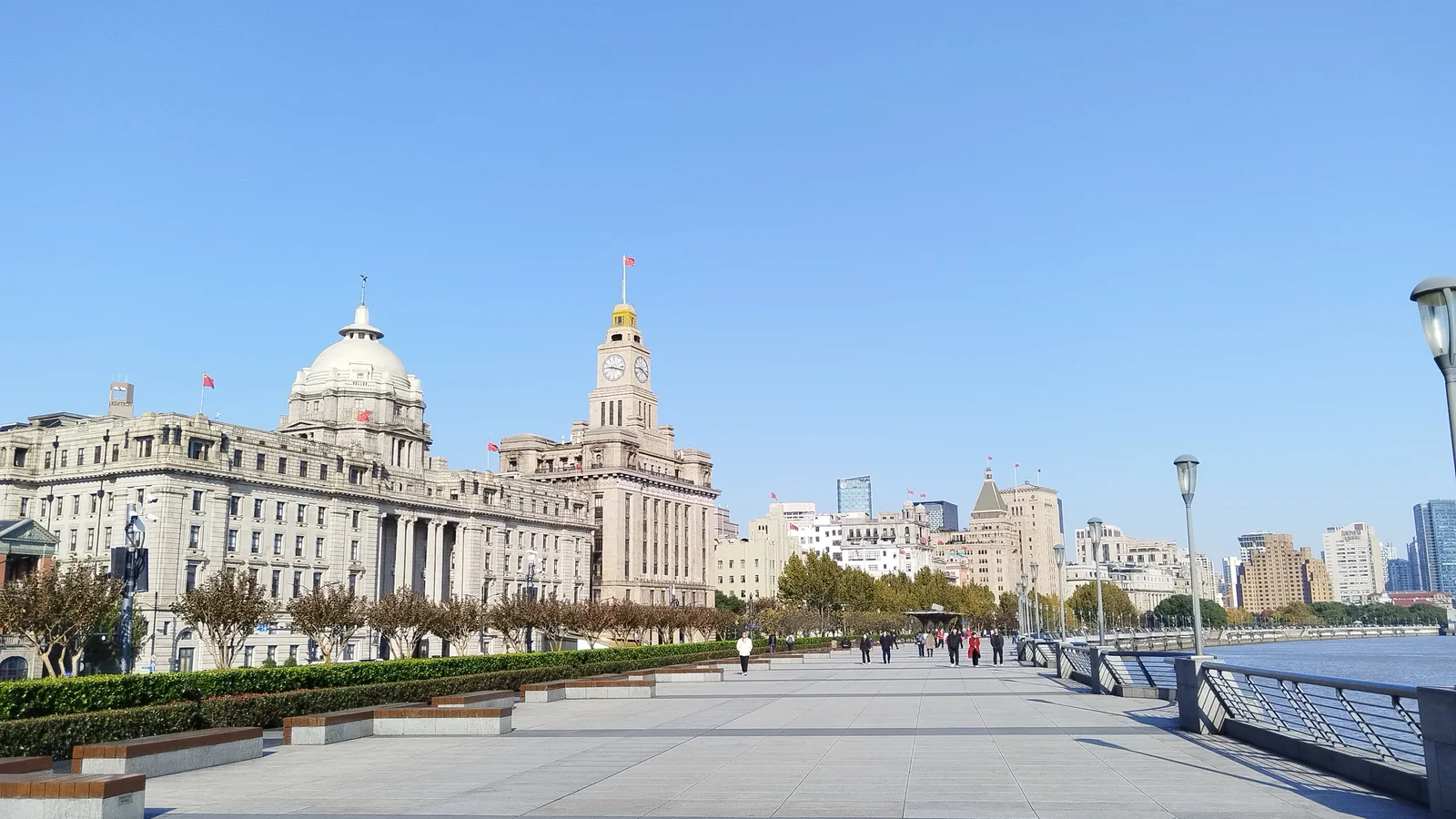
An evening here is not one thing but several: the lights, a performance, dinner, a rooftop, a walk, a shopping street, a boat, and every one starts earlier than most visitors are used to.
The waterfront and the lights
The riverfront on both banks is the simplest option: the promenade is free and never closes, and the lights across the water come on one after another after dark. The hour after sunset is the busiest of the day, because that is the picture most people came for, and the viewing platform and the stretch directly opposite Lujiazui are the hardest to walk; walk a few hundred metres towards Waibaidu Bridge or Yan’an East Road and the crowd thins. The Pudong side looks back at the Bund facades, usually quieter. A sightseeing boat shows both banks; departures are fixed-length and need booking ahead.
Performances, dinner, rooftops and bars
A performance takes an evening, not ninety minutes: allow time to get in, and audiences often come out close to the last metro. Large acrobatics and multimedia residencies have almost no dialogue, the lowest language barrier; traditional opera is the most local form and the hardest on patience; concert halls, small jazz venues and dinner-and-a-show each involve a trade-off; see the shows guide.
Dinner itself can be the evening, but the timing needs attention: people eat earlier here than most visitors are used to, popular restaurants peak earlier too, and many kitchens stop taking orders far earlier than in southern Europe. Rooftop and riverside bars sell the view and the atmosphere at prices well above an ordinary bar, and usually stay open later than restaurants, though not all night.
Walking, shopping streets and the clock
The free option is walking: the plane-tree streets of the former French Concession, or the old city’s lanes and waterways. In the evening they are quiet and the shops are shut, and the detail worth seeing in daylight is invisible; this suits someone who has already seen them once. Evening shopping streets are a separate case: the department stores stay open late, good for buying things and eating snacks, but do not expect old Shanghai. All of these finish earlier than their reputation suggests, and shift with the season.
Getting home, and three ready-made evenings
What most people forget is getting home. Last metro trains are earlier than most visitors assume, generally leaving the line’s terminus well before midnight, after which the network effectively stops and only taxis, ride-hailing and thin night buses remain. Last-train times are set per line, direction and station, so check the one you need on the station timetable or a map app rather than memorising a number. The waterfront, when the lights are at their best, is exactly when cars are hardest to get: pickup points are concentrated and the wait is long. A large theatre emptying is the same, and walking a block or two before ordering is faster.
Three plans. First visit: get onto the embankment before sunset for the historic buildings, wait for the far bank to light up, accept the crowd, then eat back in the centre. Quieter evening: eat in the former French Concession, walk a stretch of streets, and be back on the metro before the last train. An evening filled: eat first, see a residency with no dialogue, then order a car.
Not worth doing: splitting one evening across five or six stops; staying at the waterfront until the metro stops and then improvising; going to an evening shopping street for old Shanghai atmosphere; buying tickets to a late-finishing show without checking the last train first.