Etiquette
Yunjian Granary: a guide to the silos, the ground and what is programmed inside
Yunjian Granary is a group of 1950s grain depot buildings in Songjiang with water along one side, its silos, warehouses and yards kept in place and filled with exhibitions, shops and food; this guide sets out what is actually there by category, how much is buildings and how much is programming, how to get there, how long to allow, whether to eat on site, and who should come.
Last updated7 min read
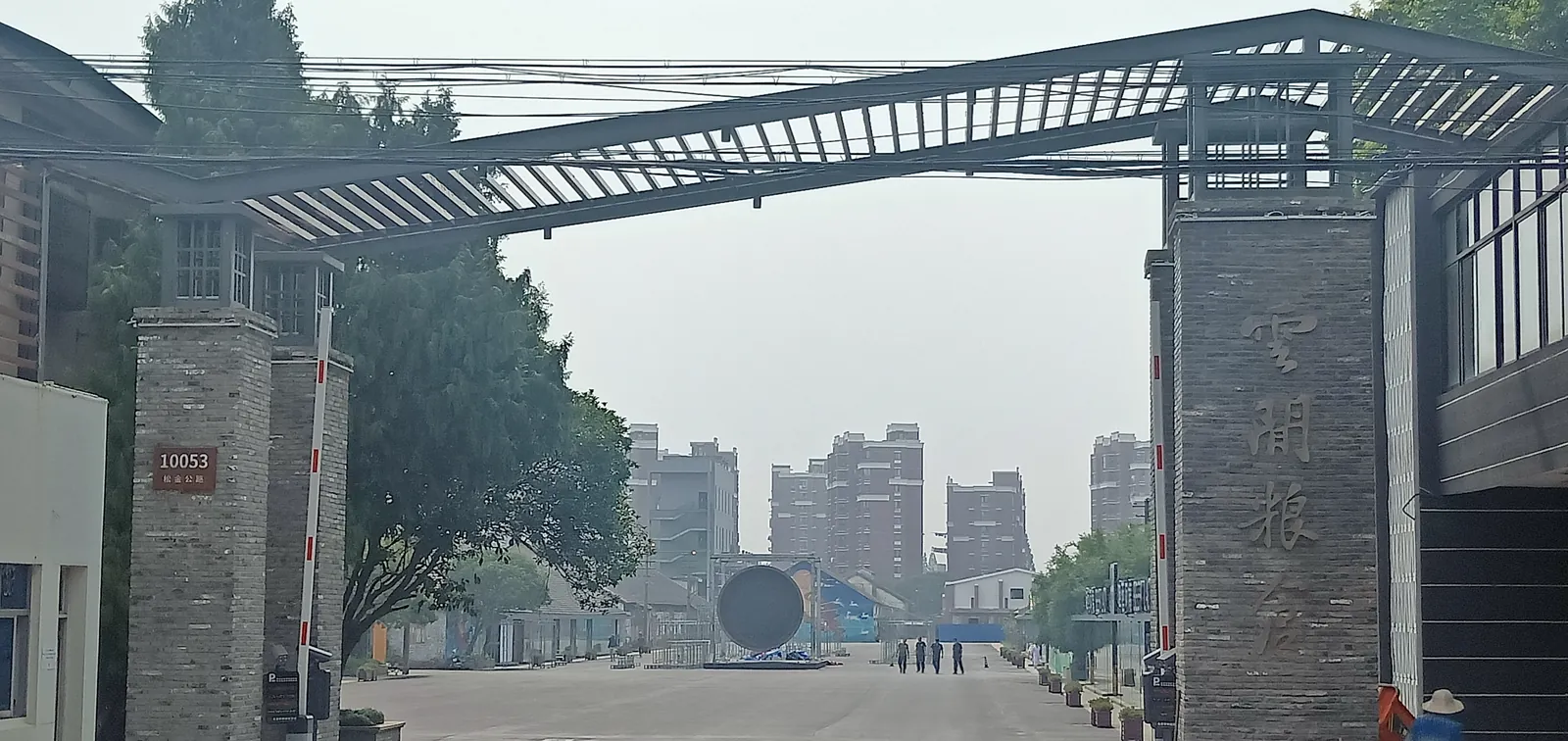
Yunjian Granary is in Songjiang: grain depot buildings put up in phases from the 1950s, with concrete silos joined to a square tower, warehouse ranges one after another, old machinery still standing in the yard, and water along one side. The depot went out of service and the site became a cultural and commercial park, keeping the industrial buildings as its ground. This piece covers what it is, what is there and how to use it; whether it is any good or worth the journey belongs to the Yunjian Granary review.
What it is: a group of grain depot buildings in Songjiang
“Yunjian” is an old name for Songjiang, so the granary carries its location in its own signboard. For decades it stored grain for the area, and the forms show it: round silos for loose grain, long low warehouses for stacking and transfer. Which block went up in which year is not set out on site; anyone needing the dates must check them separately.
After conversion the site is an open cultural and commercial park: glazing cut into the warehouse ground floors with restaurants, shops and studios behind them, exhibitions, markets and performances held on the ground, and the silos, warehouses, yards and machinery kept as the setting. It is neither a museum nor a monument but an open site carrying commercial content, with no set route through it.
What is there (1): silos, warehouses, yards and the waterside
The silos: cylindrical concrete silos joined to a square tower with a vertical row of small windows, the largest single mass here and the most photographed part; up close, water staining and old marks show in the concrete.
The warehouses: brick and rendered ranges one after another, with terracotta roofs, iron doors, shutters, and faded painted characters and old slogans still on the walls. Some ranges are being re-tiled, and scaffolding and hoarding are normal here.
Yards and lanes: a grid with no fixed route, much larger than the photographs suggest, since one building in a picture has several identical ones behind it. The old machinery still stands in the yard, the most substantial object after the buildings themselves.
The waterside: water runs along one side of the site, and the stretch beside it is relatively open ground rather than building.
What is there (2): exhibitions, shops, food and drink, interpretation
Exhibitions and events: there are gallery spaces and event ground, but the programme is irregular. Sometimes a market, sometimes an exhibition or a performance, sometimes nothing; banners go up on walls and warehouse facades, and a banner does not mean the door is open that day.
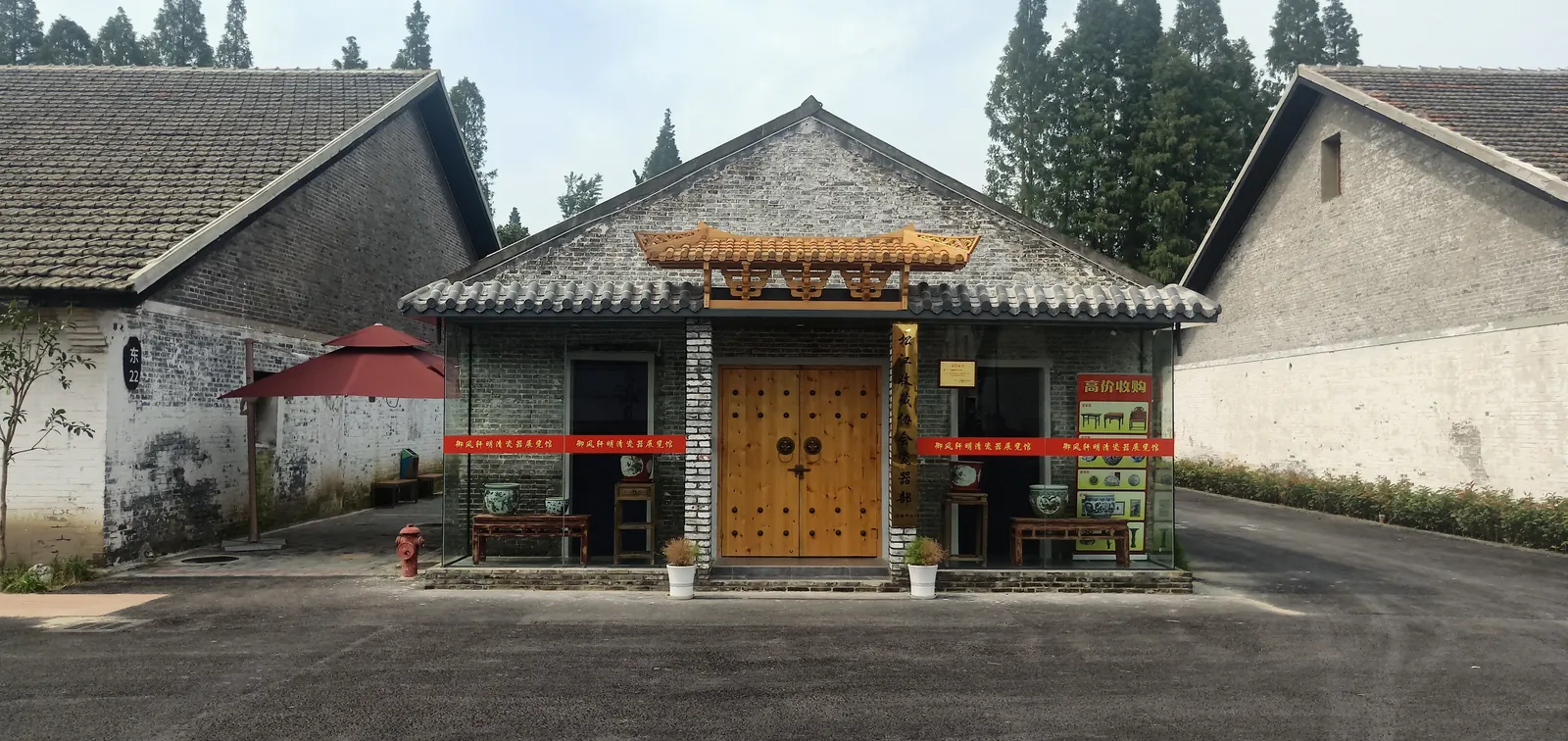
Studios and small businesses: some units go to studios, craft workshops and small shops, usually one or two rooms. Several in the same row are shuttered or being fitted out, and what you can enter depends on the day.
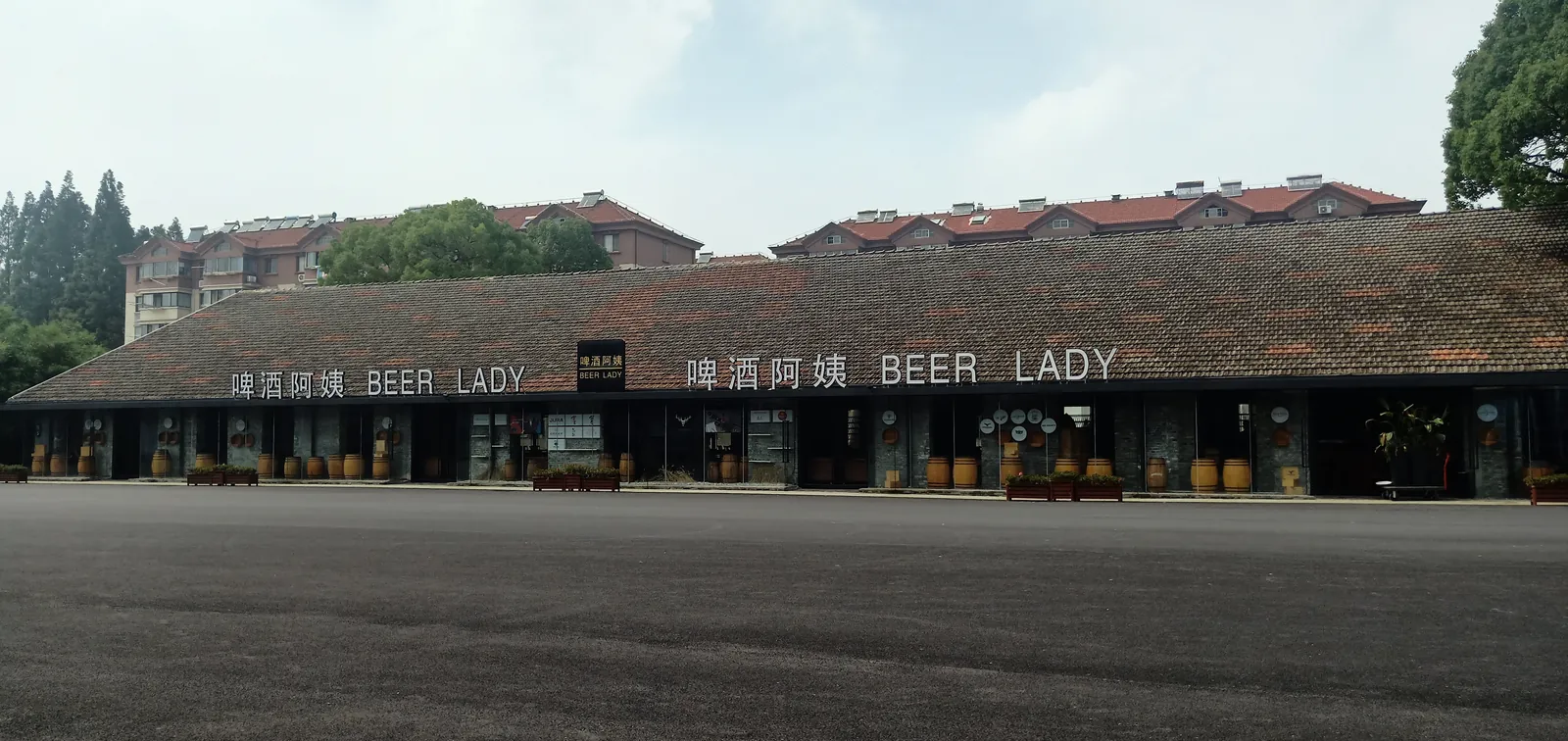
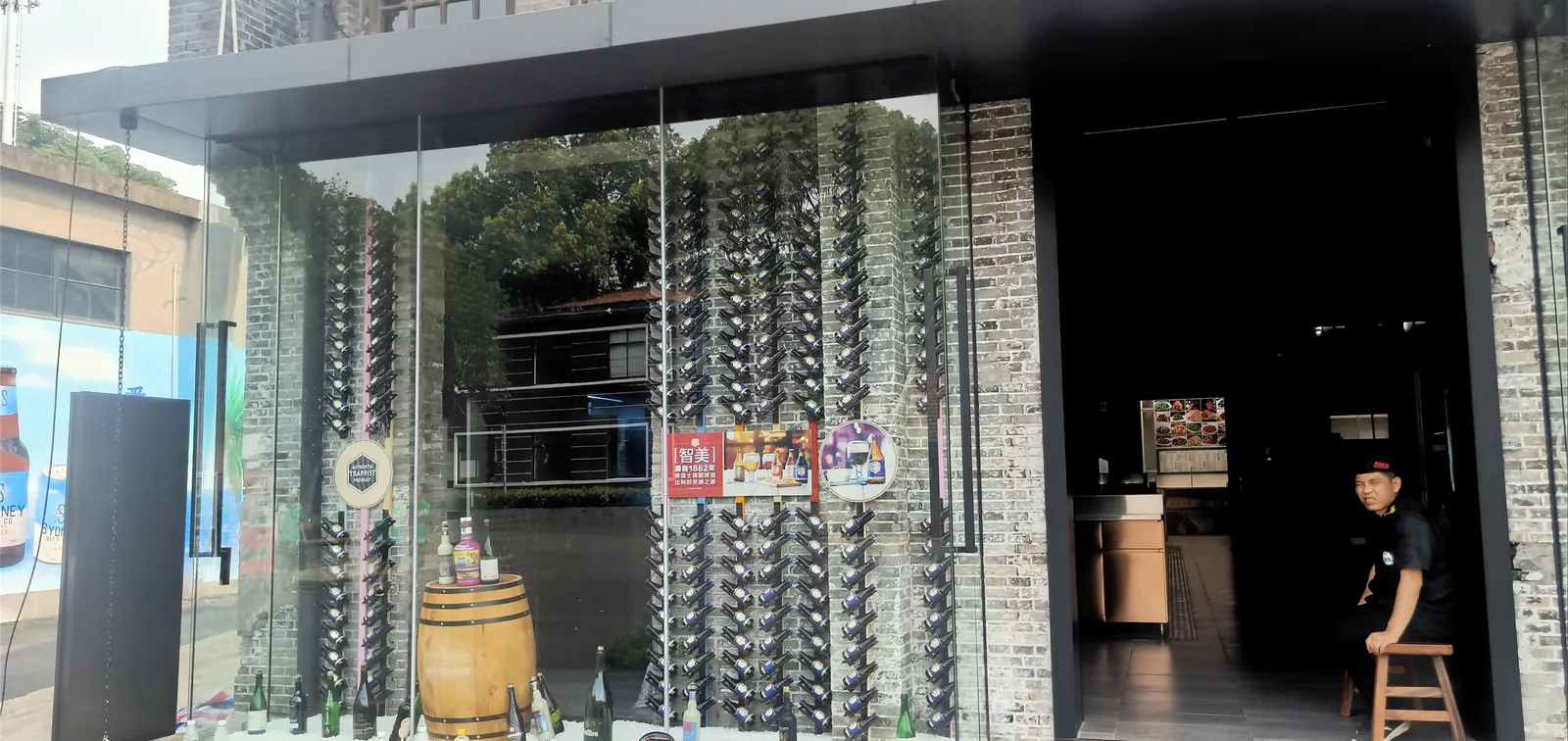
Food and drink: the glazed range is mainly for restaurants and drinks, with seating mostly outdoors or half outdoors and drinks, light meals and full meals mixed together. Sitting down is the most practical thing to do here.
Interpretation: the thinnest layer. The entrance carries the name, and paving, trees, planters and signs are in place, but on grain storage itself almost nothing is explained systematically. How grain came in and out of the silos, and what the old machine did, are left to guesswork, and nothing in the gallery spaces joins the story up. A few units carry panels, but those explain a business, not the ground.
Buildings and programming: what decides a visit
The genuinely industrial parts: the silos and their tower, the warehouse roofs, doors and windows, the old machinery in the yard, the faded characters on the walls. None of it has been scrubbed back to new; staining, flaking whitewash and rusted iron doors survive, and it wears better than most parks that restore the old as old.
The smoothed parts: the steel canopy and brick piers at the entrance, the glazed frontages, the black disc at the end of the main avenue and the gable mural are additions, and paving, trees, planters and signs have tidied the ground into a park’s grammar. Mid-site it is easy to feel this is an ordinary park with a few old buildings in it. Industrial character is concentrated in the silo group and in the warehouse roofs, doors and windows; away from those two, how neat the ground is carries the atmosphere.
The buildings are fixed and the programming is not. On a weekday morning the yards often hold only a few people and what you see is almost entirely architecture; on a weekend with a market or a performance the same ground becomes a busy commercial street. Two different visits, and before setting out you cannot tell which is coming without checking what is on that day. So treat the buildings as the main course and the programming as luck: if something is scheduled, plan around it; if not, plan on an empty site and do not rest your expectations on shops and exhibitions.
Getting there, how long to allow, whether to eat, pairing with Songjiang
The direction is south-west, to Songjiang, typically over an hour each way from the centre: rail transit towards Songjiang first, then a bus or taxi from the station to the site. Routes, interchanges and connecting services change, so confirm the route against the day’s information rather than an old guide. Driving removes the change of transport; parking is a matter for the day.
The site takes an hour to an hour and a half to walk, two hours with a drink and a slow look, and half a day once the return journey is counted. The stretch after opening is best, with the ground empty and the light soft. Almost all of it is outdoors with little shade, so in summer only the morning is comfortable; weekends and holidays are the opposite, and crowds come when something is on. Opening hours, closing days and event programmes change, so check the day’s information before you go.
Eating there is possible, with expectations set: a converted park prices food on park logic, usually above comparable places on an ordinary Shanghai street, and portion and quality do not always follow. For a cheap, solid local meal, leave it to old Songjiang town.
On pairing: Guangfulin is in the same district, and old Songjiang town has a garden, old streets and a pagoda. All are in Songjiang but none is next to another, so a car link is needed. One day can hold them if you start early, with one or two as the main objective; the granary works best as a stop alongside those, for an hour or two. The Guangfulin guide notes the return trip alone runs to two or three hours, so do not overfill the day.
Who should come, who can skip it, and how to decide
Come if you are interested in industrial architecture and urban renewal and will walk an empty yard on your own; if you want to photograph the silos, warehouse facades and old characters, best in the soft light at either end of the day; if you are already in Songjiang for Guangfulin or the old town and can add a stop; or if your itinerary is loose and you want a quiet hour or two outdoors.
Skip it if you expect a museum, since there is no systematic exhibition, interpretation or route; if you have only one day in Shanghai, since the return journey eats half of it and the city uses the time better; if you want a historic monument, because the history here is industrial and close-up, without a monument’s form or sense of age; if you are coming mainly for shops, studios or restaurants, since few may be open; if you dislike walking or sun; or if all you want is one industrial-style photograph, which the city’s old factory districts can also give you.
To decide, ask three questions. Is this visit for the buildings or the programming? For the buildings, come; for the programming, check what is on first and expect little if nothing is. Do you have half a day or more, and are you already in Songjiang, or willing to put the rest of Songjiang into the same day? If yes, a stop pays; if no, take it on the way next time you are in Songjiang. Can you accept open ground, little shade and the chance of an empty site? If yes, go in the morning; if no, move the visit to a day when something is on, or give the time elsewhere. If two of the three answers are no, leave it for another time. This piece only tells you what you will find; whether it is worth it is the review’s judgement.
place.gallery
Photographs
Related reading
Etiquette
Columbia Circle and Tonglefang: two routes through Shanghai's converted factory sites
Columbia Circle and Tonglefang are two versions of the same Shanghai story: a country club and research institute turned low-rise garden campus, and a lane of small workshops turned small creative quarter. What each one is, how their characters differ, what there is to do, how to join them in an afternoon and an evening, and which expectations will not survive the visit.
7 min read