What to see
Yunjian Granary review: what is left once the photographs are taken
Yunjian Granary reviewed: a group of 1950s grain silos and warehouses in Songjiang now run as a culture park, and what the photographs leave out — how much is actually open, how long it takes, and whether the trip from central Shanghai pays.
Last updated5 min read
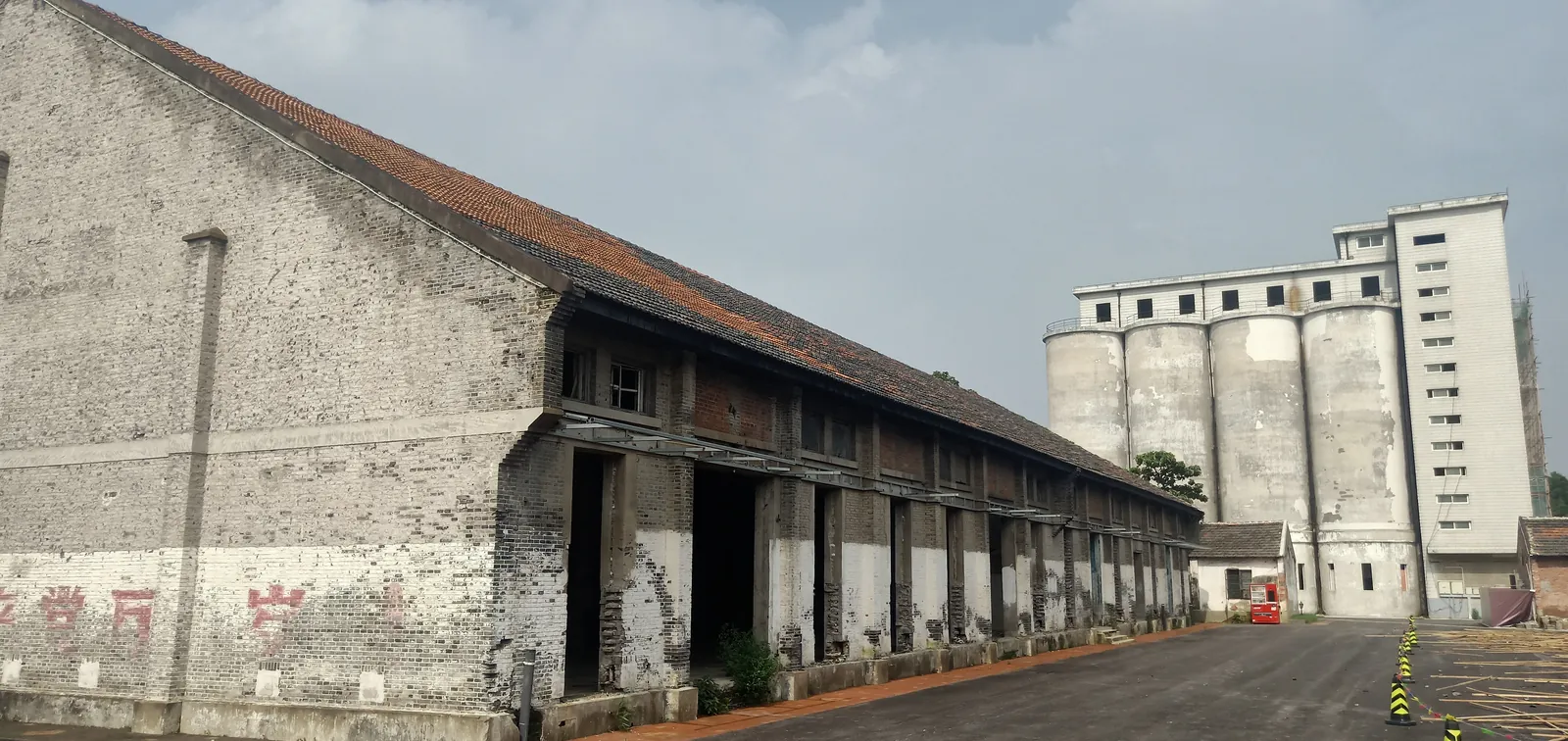
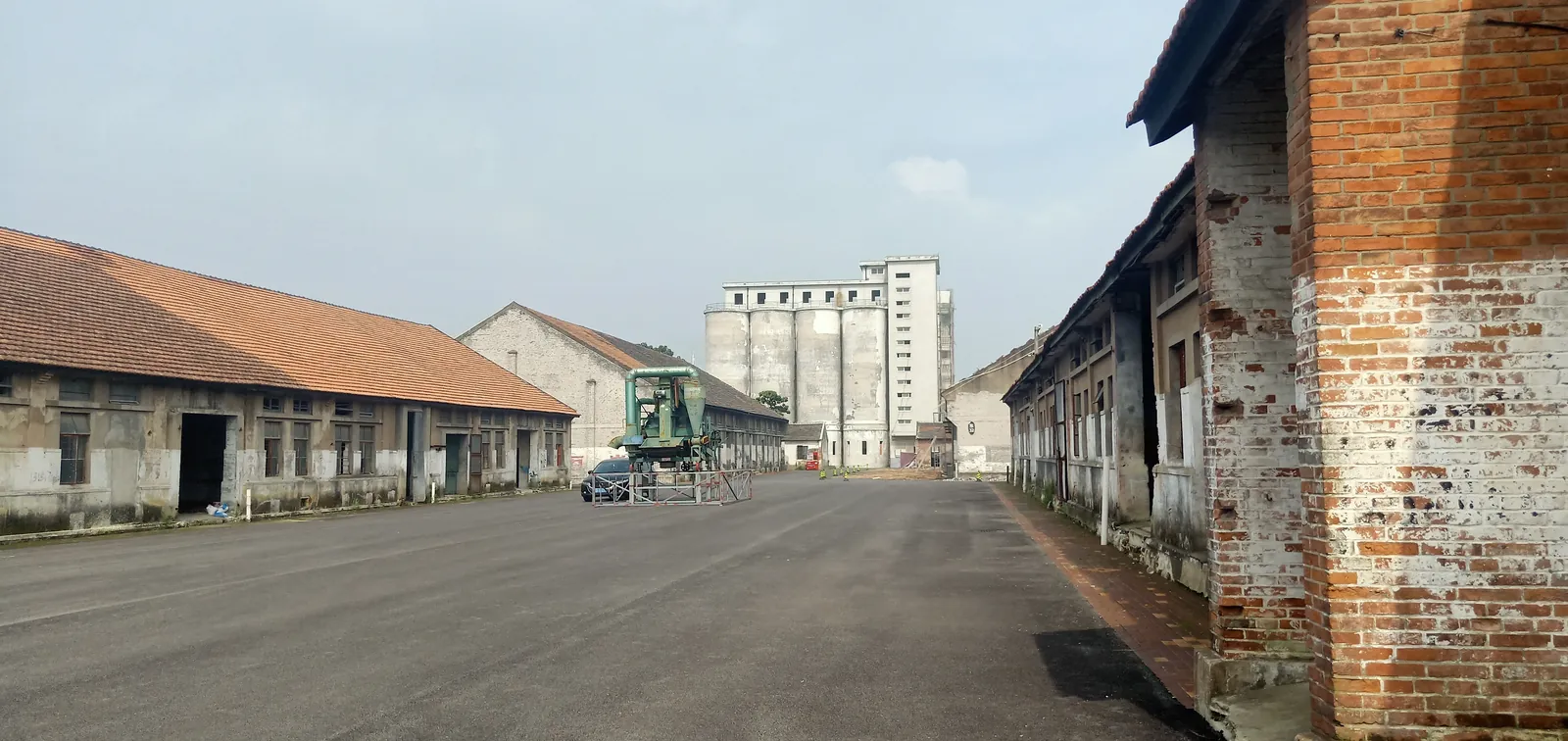
Yunjian Granary sits in Songjiang: grain depot structures put up from the 1950s onwards — concrete silos, ranges of long warehouses, yards, old machinery still standing. The depot went out of service and is now a culture and creative park. Photographs of the silos travel further than the name does; the question is what is left once they have been taken.
What it was, and what the conversion kept
“Yunjian” is an old name for Songjiang, so the granary carries its location’s history in its signboard. Built in phases from the 1950s, it stored grain for the Songjiang area for decades: round silos for loose grain, long low warehouses for stacking and transfer, as the forms suggest. Which block went up in which year is not set out on site; if the dates matter, check them separately.
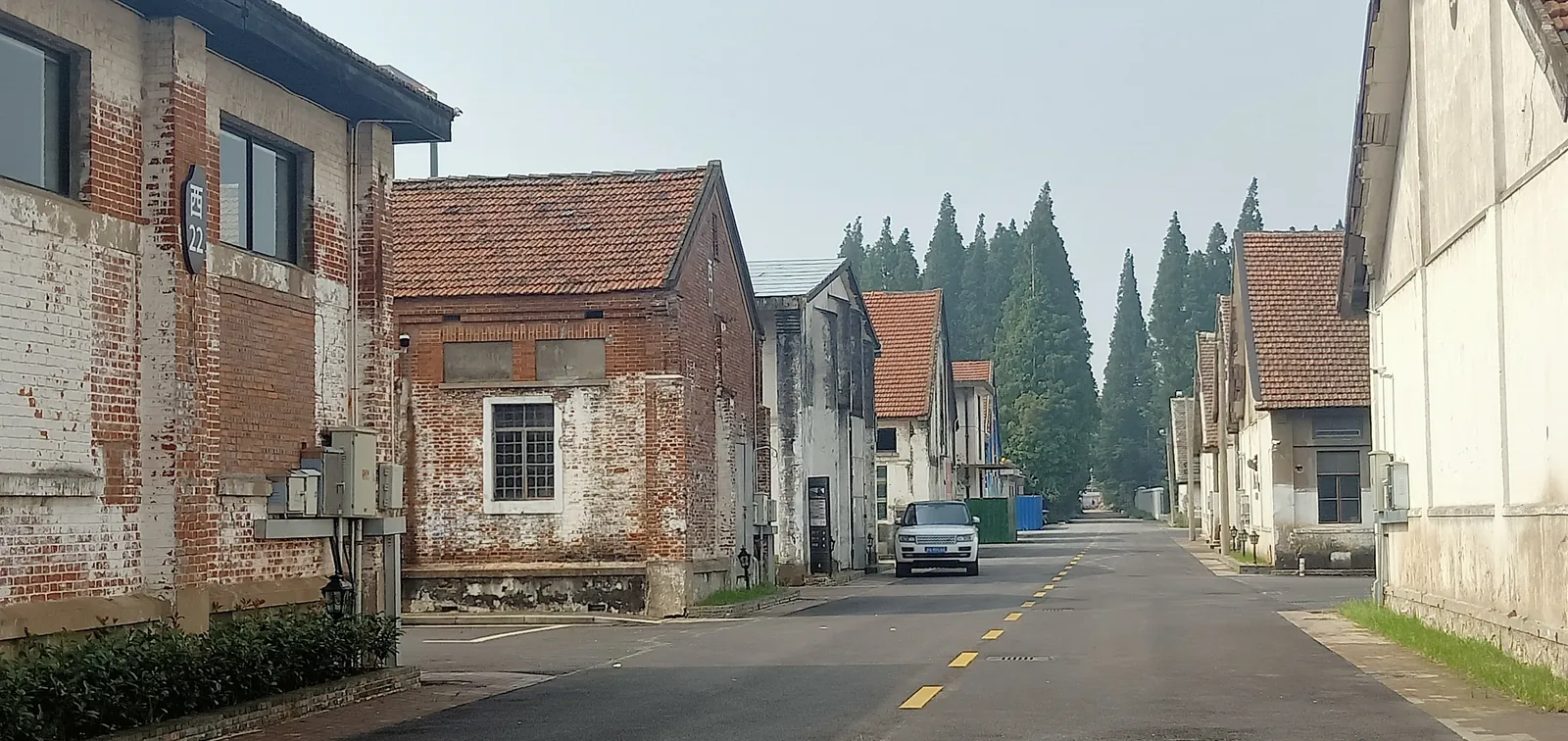
What the conversion kept is the heaviest thing here: the concrete silos and their square tower, the brick-and-render warehouse ranges, the terracotta roofs and iron doors, the faded painted characters, the old machinery in the yard. None of it has been scrubbed back to new: staining and flaking whitewash survive, which is why it wears better than most parks restoring the old as old.
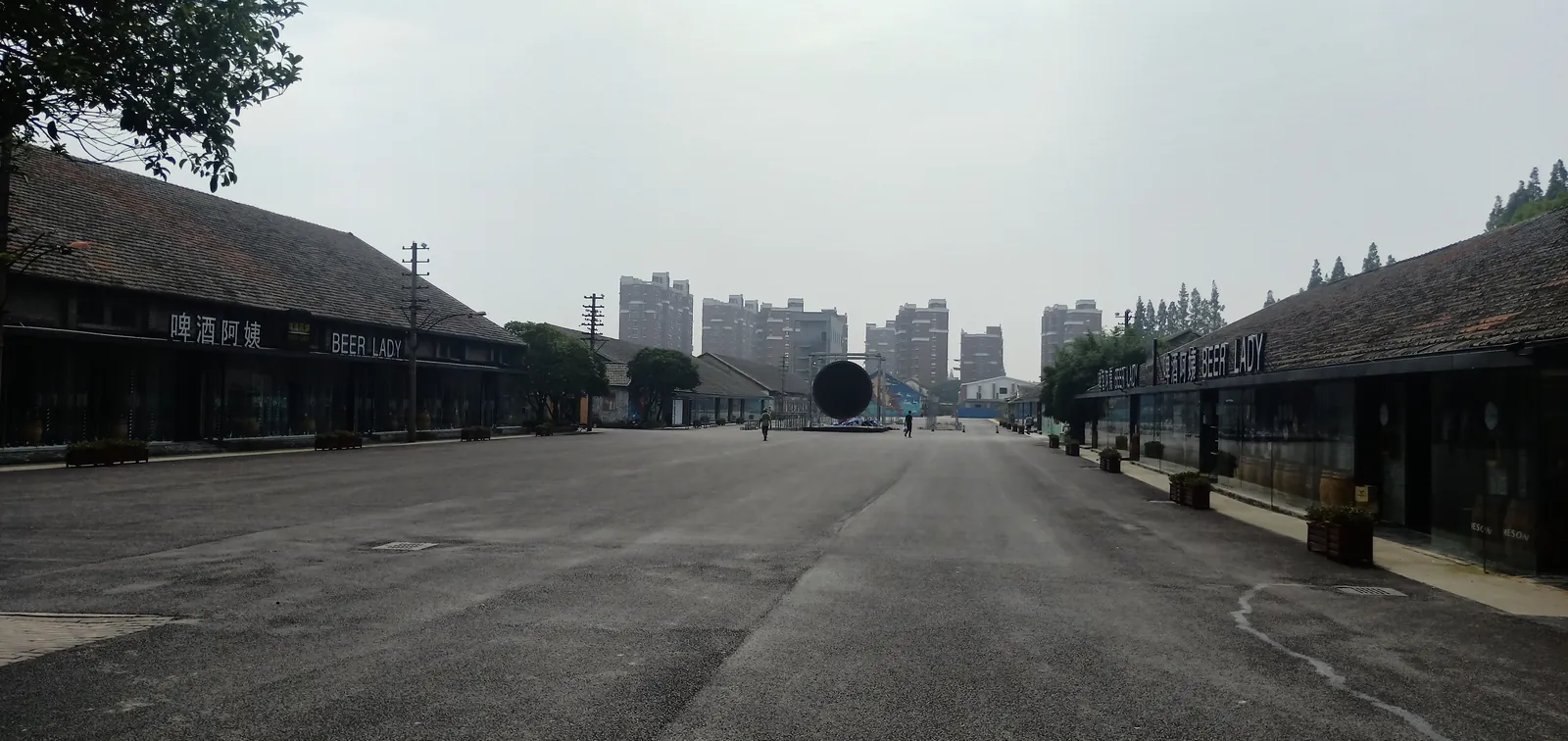
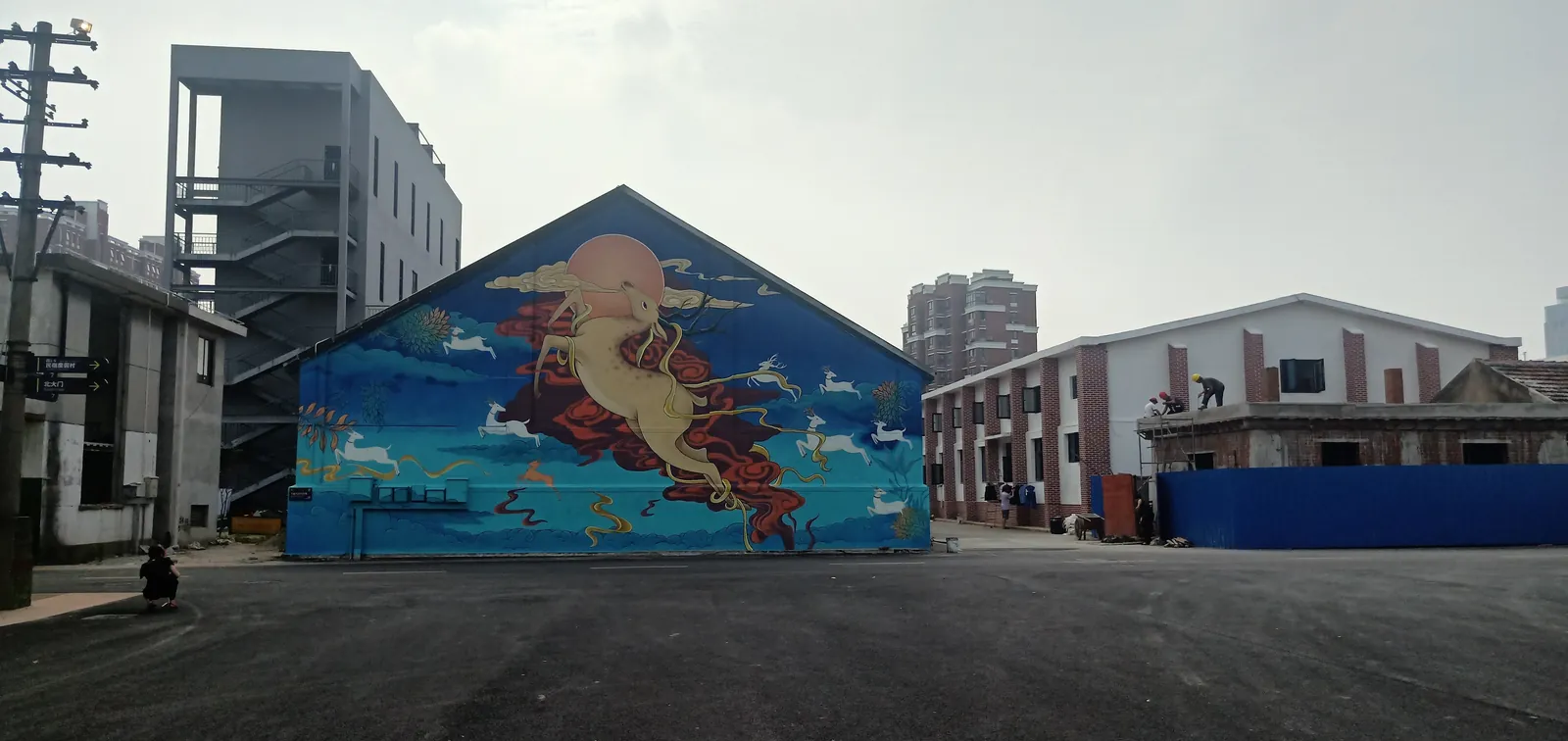
What was added is the steel canopy and brick piers at the entrance, the glazing cut into the warehouse ground floors, the black disc on the main avenue, and the gable mural. The mural and the surviving machinery work; the glazing shows which units stand empty.
What there is to do inside
Walking is the main thing. The park is a grid of lanes and yards, one warehouse range after another, larger than the photographs suggest: one building in a picture takes several identical ones to walk past. There is no fixed route; you walk it your own way.
What you look at is the architecture itself: silos, the rows of windows up the tower, old characters on the brick, iron doors and shutters.
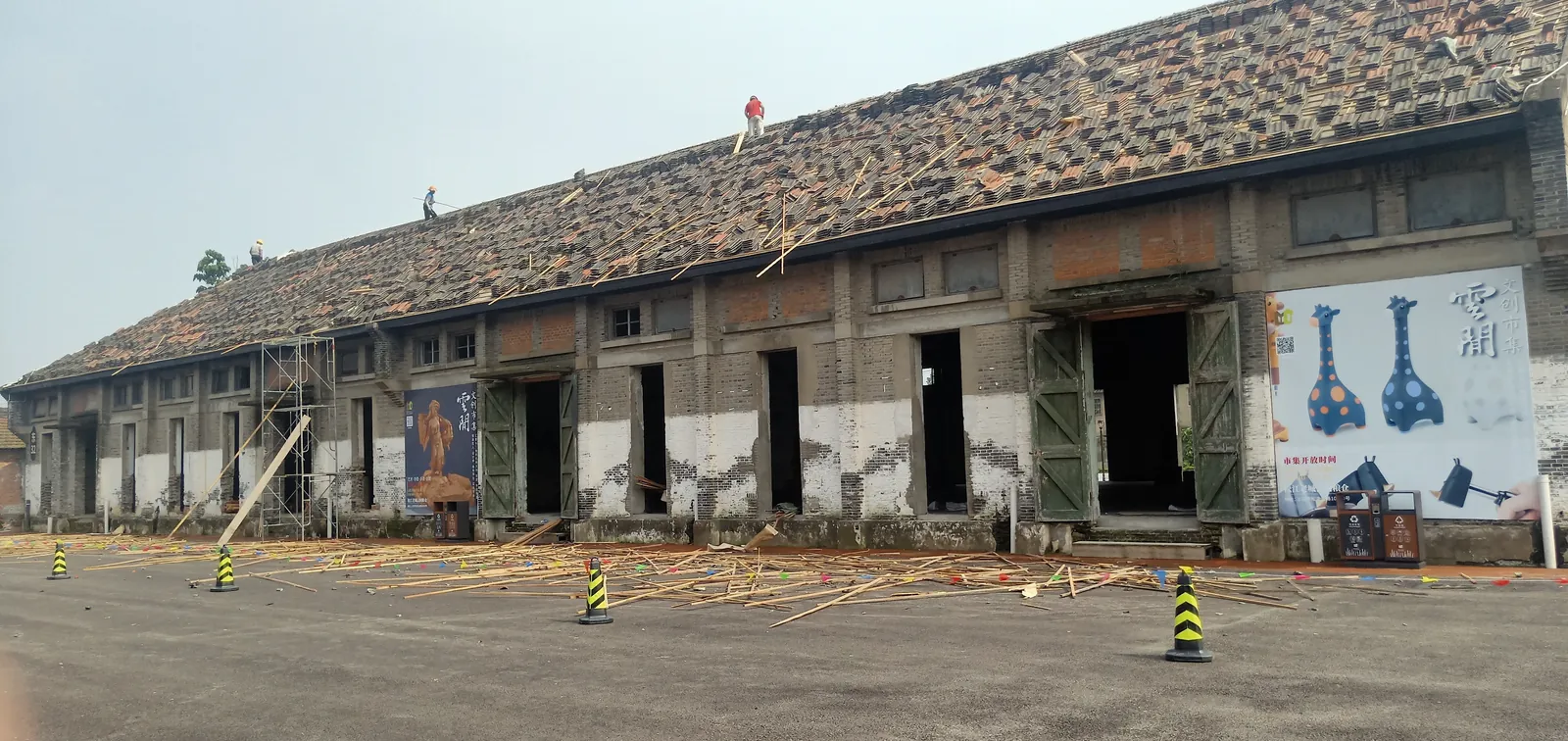
Exhibitions, studios, food and drink and events form the second layer: the glazed range is meant for restaurants and shops, banners advertise markets and exhibitions, and other units are exhibition or craft spaces. This layer has the most turnover: these photographs come from an earlier visit, when the avenue and yards were almost empty, several units shuttered and a warehouse range being re-tiled. Any list of what is open goes out of date: which doors open, and whether anything is showing, can only be checked on the day.
Beyond the photographs, what is left
The visual appeal is real: concrete cylinders against a blue sky, brick, whitewash and terracotta alongside, a palette that holds across the whole site.
The problem is that photogenic is a low bar, and what is left splits in two. What is left is a substantial set of genuine industrial buildings you can walk through freely; early in the day the yards hold few people, and walking a stretch alone is itself the content. What is not left is explanation: almost nothing explains grain storage — how grain came in and out of the silos, what the old machinery did — so you are left guessing, and no exhibition thread holds you inside the warehouses. The buildings carry the place, not the programming, so the answer leans towards the architecture rather than the park.
Getting there, when to go, and how it fits with the rest of Songjiang
The direction is south-west, to Songjiang, typically over an hour each way from the centre: rail transit in the Songjiang direction, then a bus or taxi to the site. Routes change, so confirm the day’s arrangements before setting out.
On time, the site takes an hour to ninety minutes to walk, two hours with a drink and a slow look; with the return journey, allow at least half a day. The stretch after opening is best: empty yards, soft light, and in summer the only hours you can stand there, since almost all of it is open asphalt with little shade. Weekends and holidays bring markets or performances, and the crowds with them.
Pairing is what the trip hinges on: Guangfulin is in the same district, and old Songjiang town has a garden and a square pagoda, but none is next to another, so a car link is needed. One day can hold one of them plus the granary if you start early; the Guangfulin guide notes the return trip alone runs to two or three hours.
Who should come, who should not
Come if you like industrial architecture and want to photograph silos and old workshops, or are already in Songjiang for Guangfulin or the old town and can add a stop.
Do not come if you have only two or three days in Shanghai; if you expect a designed exhibition with a route; if you are coming mainly for shops, studios or restaurants, since few may be open; if you dislike walking or sun; or if you only want one industrial-style photograph, which the city’s old factory districts also offer.
The verdict: worth coming for the silos and warehouses themselves and an hour or two of slow walking; it does not support a journey of its own. Inside a Songjiang day, with Guangfulin or the old town plus the granary, yes; from central Shanghai for this alone, no.
Photographs