Etiquette
Nanxiang old town: the birthplace of xiaolongbao, and the town itself
Nanxiang, in Jiading, is one of the few towns on Shanghai's edge that still keeps a real old core: a pair of ancient brick pagodas, a temple and the classical garden Guyi Garden, all within walking distance. It is also where xiaolongbao come from, though the long queue on the old street measures fame. This guide covers what you actually see, how commercialised the street is, whether half a day is enough, how to get there, and what disappoints.
Last updated7 min read
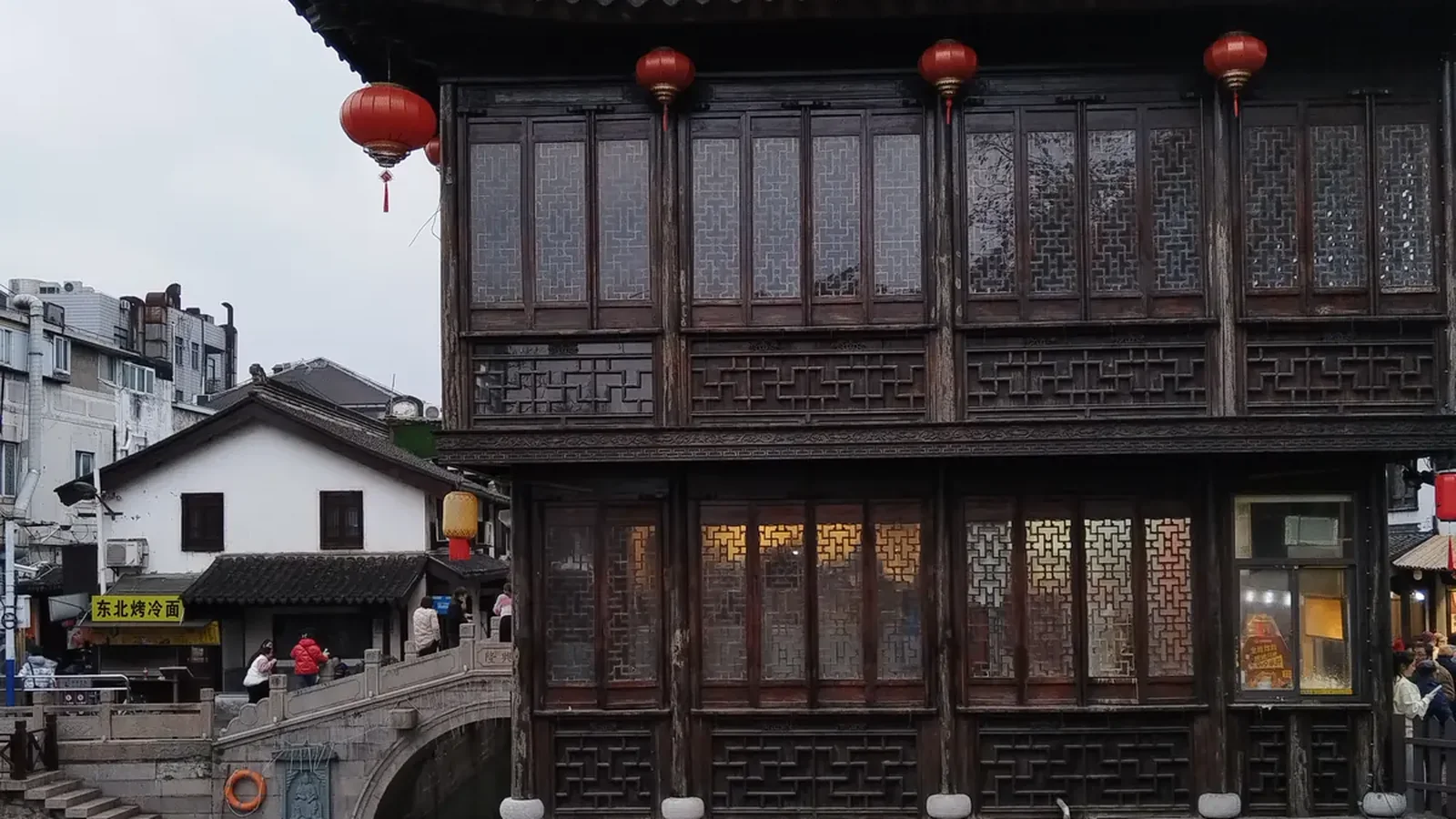
Nanxiang, in Jiading in Shanghai’s north-west, is one of the few towns on the city’s edge that still keeps a real old core: a lane along the water with stone bridges, a temple, a pair of ancient brick pagodas, and the classical garden Guyi Garden, a short walk away. It is also where the Nanxiang line of xiaolongbao comes from; the name travels further than the town. This guide covers what you see, the dumpling business, the commercialisation, whether half a day is enough, how to get there, and what disappoints.
What Nanxiang is: a real old core, on a small scale
Nanxiang is in Jiading, north-west of the centre, a town on Shanghai’s outer edge. Its old core sits against a canal: the lane runs along the water, stone bridges cross it, and below them are reflections of white walls, timber lattice windows and shop signs.
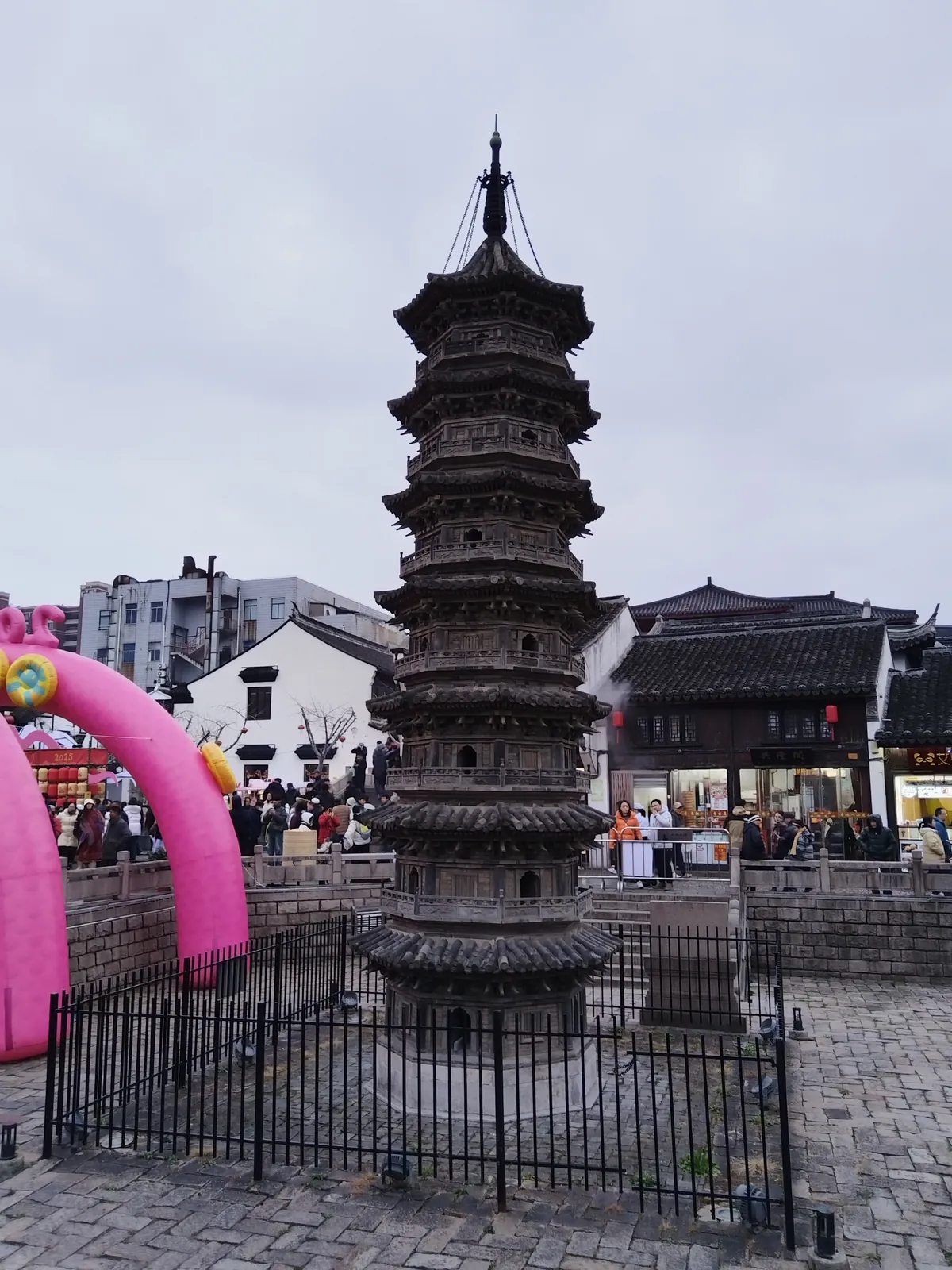
Three things are genuine monuments. A pair of old brick pagodas stands beside the lane; their brick eaves and finial show their age, and they are usually called around a thousand years old, medieval work, though exact dates and how much has been rebuilt are disputed, so check official material. The town has a temple, labelled Yunxiang Temple on the old street’s own visitor map, on the lane’s route; whether it is open, and how entry works, needs confirming that day. The third is Guyi Garden, the classical garden, a short walk away but walled and normally ticketed, and separate from the old lane.
The scale matters: this is a town-level old core, not a water town on the order of Zhujiajiao. The lane takes under an hour, and the canal is narrow, one river through a town rather than open water. The gain is density: pagodas, temple, garden and snacks all walkable; the cost is lowered expectations.
Xiaolongbao: the town of origin, and what the queue actually measures
Nanxiang is home to the Nanxiang line of xiaolongbao: larger, with a slightly thicker skin and a coarser chop, so wheat and pork register more strongly than in the city version, which is smaller and finer, thin-skinned, delicately minced, with clear soup. Neither is better; it depends if you want fine or substantial. Eat them in fixed order: hold one in a spoon, bite a small opening to release the steam, drink the soup, then eat. Bite straight in and the first thing you meet is scalding soup.
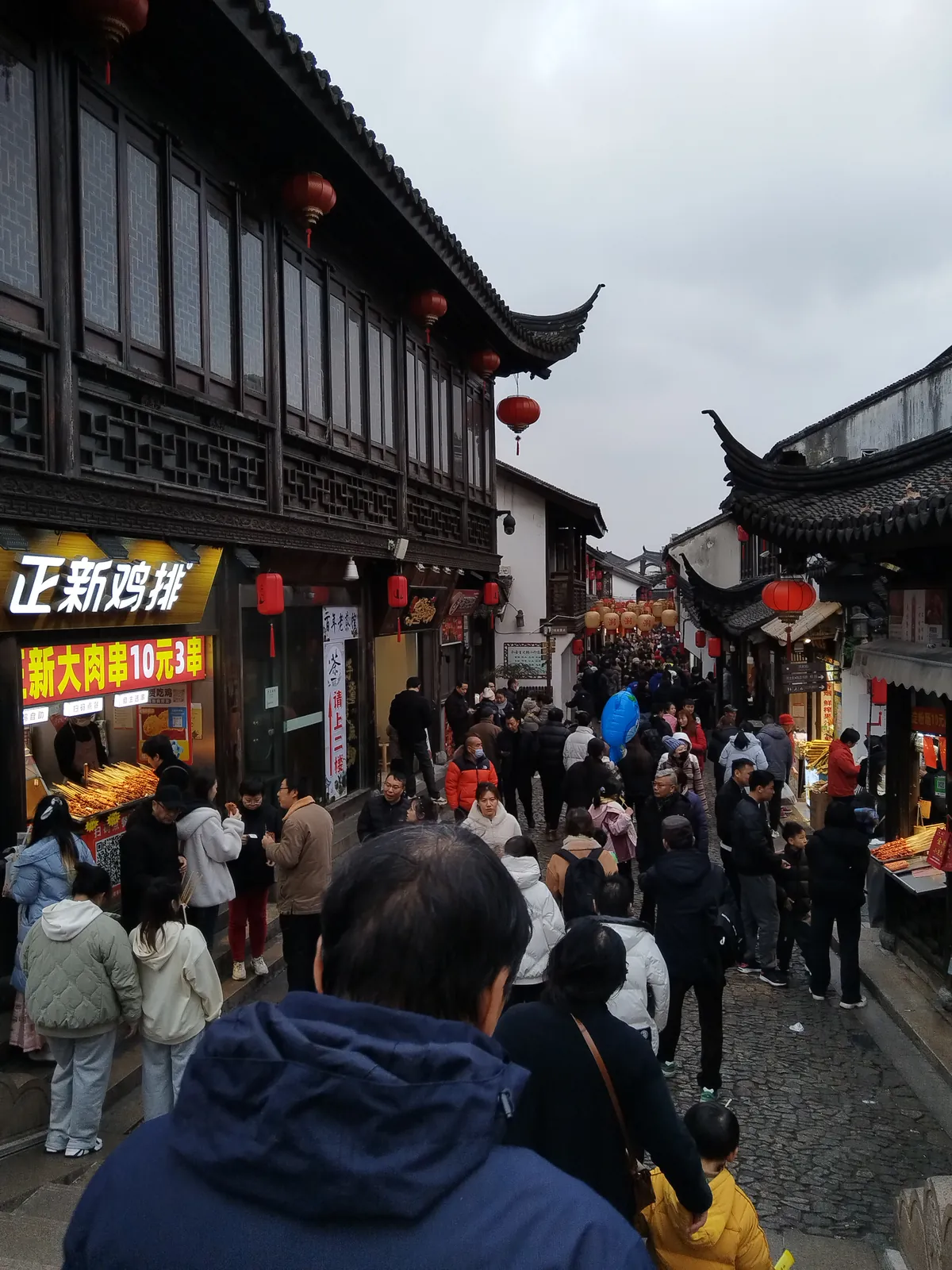
The town works the connection hard: the lane has a very high density of snack shops, steamers at the door, and signs, gift boxes and packaging all selling the idea of origin. At holiday times the best-known shops queue into the street.
Two honest points. Queue length reflects fame, location and how things spread, not the cooking: plenty of Shanghai shops turn out a competent xiaolongbao, so there is no need to stake a meal on the longest line. And the famous shops here are not automatically better than good city shops; the gap is usually far smaller than the queue is long, and what you spend is time. The useful test is still the basics: thin elastic skin, springy filling, clear broth with body, steamers steaming rather than pre-steamed baskets reheated. For eating and judging, the xiaolongbao Q&A goes deeper than this page.
What you actually see
The old street: a stone-paved lane along the canal, lined with dark timber shopfronts, white walls, black tiles and rows of red lanterns. Stone bridges can be climbed for a view along the water, where signs and eaves reflect. This is the busiest, most thoroughly commercialised stretch in town.
The pagodas: the pair stands on paving beside the lane, inside iron railings, with a stele nearby. A circuit takes ten minutes, but they are the real monument in town and worth a proper look: brick eaves, taper, finial. Do not use them only as a backdrop; take dates and history from the on-site board.
The temple: the one labelled Yunxiang Temple on the old street map, on the lane’s route. Its scale and opening arrangements have shifted in recent years; entry rules are for the day.
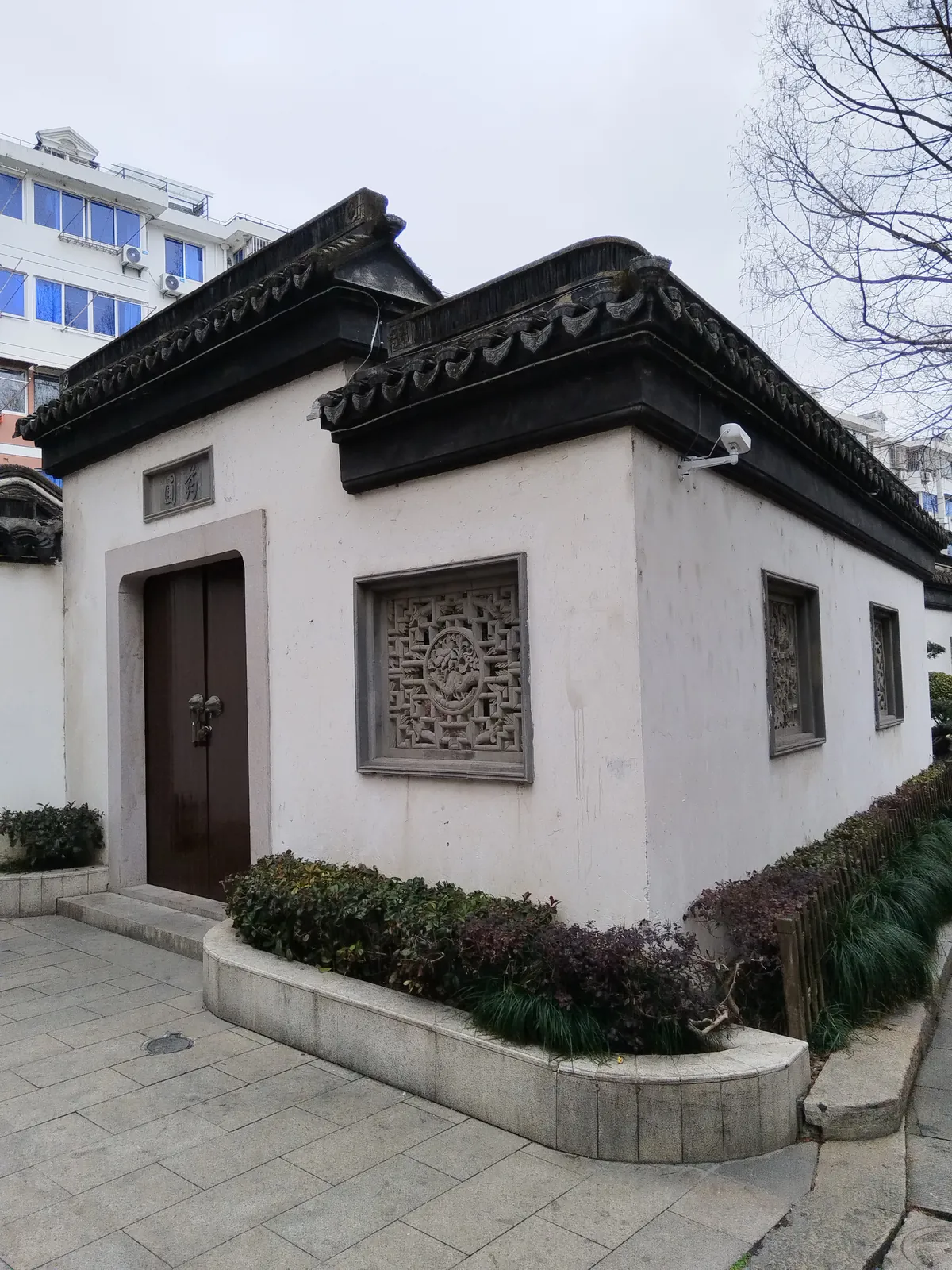
Guyi Garden: the part of Nanxiang most worth a visit in its own right. Pond, rockery, covered walkways, lattice windows and stands of bamboo, strung along the water with a complete sequence to walk. Its origins are usually placed in the Ming dynasty, and today’s layout has been rebuilt more than once; for precise dates use official material. The garden normally charges admission, with prices and concessions published officially and revised over time, so no figures are given here; a circuit plus sitting down is one to two hours.
How commercialised the old street is, and what that means for a visitor
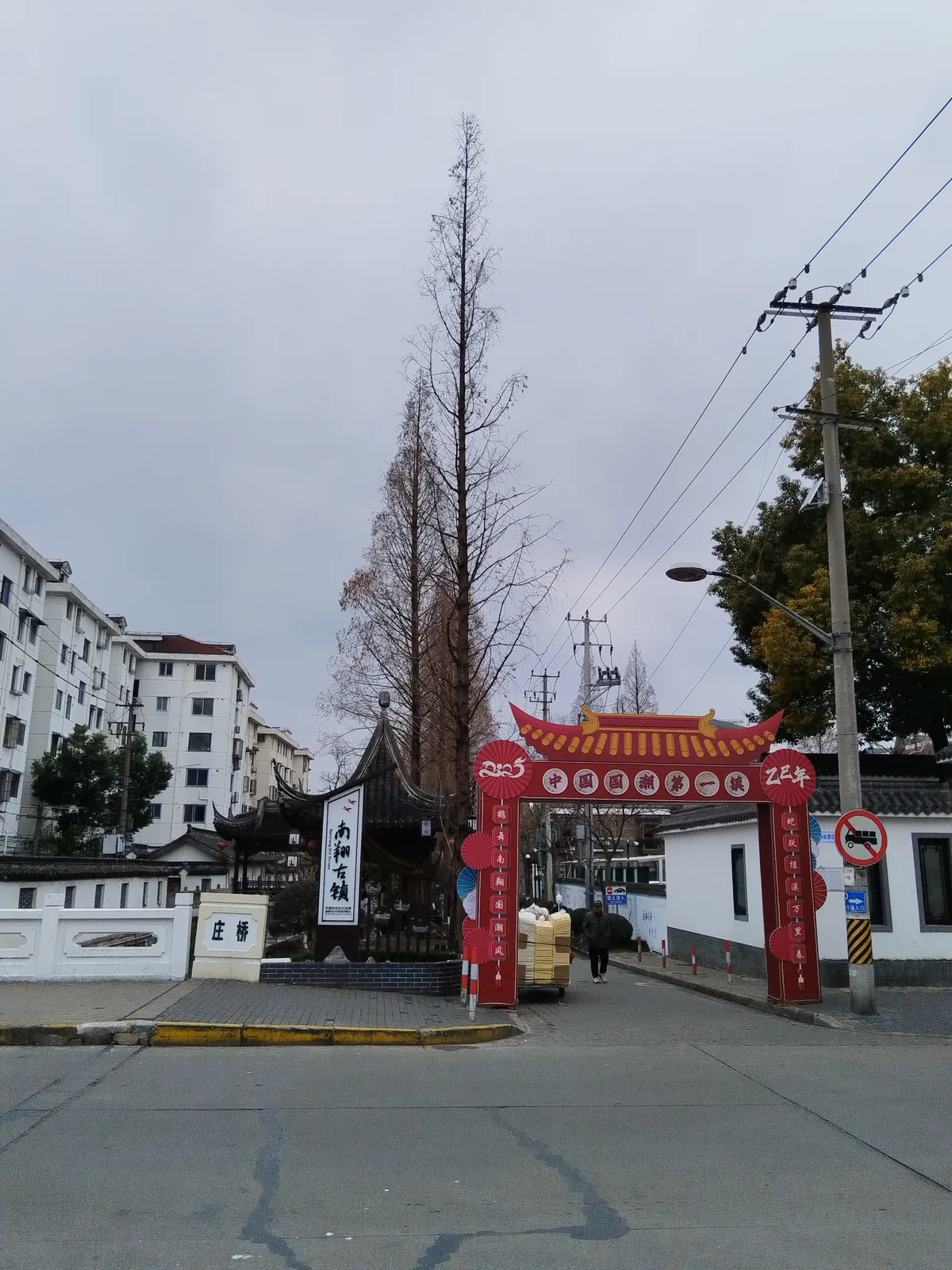
Thoroughly. The lane is now mainly about food: skewers, fried snacks, milk tea, dumpling shops, souvenirs, with bright large signage, chain brands in the best positions, a lettered archway and photo props at the entrance, and lanterns at festivals. It is a food street built for visitors, fitted inside the shell of an old lane.
That does not make it fake. The pagodas, temple and garden are real, and the line of the lanes is old; but the street-facing facades, paving and businesses are largely this round of tourism money. Read it as a commercial street with an old base under it, and what you see matches what you expected.
Three consequences. Crowds: holiday and weekend afternoons into the evening are worst, the lanes are narrow, and you step aside to photograph. The food is uniform: what is sold along the lane exists in any Jiangnan scenic area, at scenic-area prices, so for a better meal walk a few blocks off the old street, where the cooking is for residents. And daily life means going to the edges: turn into a side alley, or out into the residential area, and laundry, bicycle repair and vegetable shopping are still there, but that is ordinary town life, not the attraction.
For quiet, the best window is the morning around opening time. Weekdays beat weekends, and rain empties the lanes at the price of slippery paving.
Time, getting there, and pairing it with the rest of Jiading
Time: the lane, the pagodas and the temple take about two hours, one stop in a half day. Add Guyi Garden properly and a meal, and half a day is full; add other Jiading sights and it is a whole day. No transport is needed inside the town; wear comfortable shoes.
Getting there: Nanxiang lies north-west of the centre, towards Jiading. Rail transit has a station in the town area, and walking from the exit towards the old street is usually the most direct approach, though a short connecting ride may be involved; check the current map and official information. This page deliberately gives no line numbers or station names, because that detail changes; confirm the line, station, exit and walking time that day. Taxis and driving also work; the town has parking, tight on holidays.
Pairing: Jiading’s own town centre has an old street, a Confucian temple, gardens and a pagoda, and complements Nanxiang: one for the waterside old core and brick pagodas, the other for a county town’s lanes and academy. Opening times, booking rules and tickets differ, so arrange them from the day’s information; both in a day means an early start and plenty of walking. The Panlong Tiandi review covers the same new-versus-old trade-off.
What disappoints, and who should come
First, the words “old town”. They suggest quarters of old houses and life on the water; what you get is one commercialised lane plus a few genuine monuments, and only the pagodas, temple and garden are hard goods. Anyone who came to wander an ancient town feels the gap most.
Second, the size of the pagodas: a pair on paving behind railings, seen in minutes; worth looking at, not a reason for the trip.
Third, the dumpling queue and the trade around it: queues measure fame, and gift boxes carry scenic-area prices.
Fourth, the water: the canal is narrow and framed by signs and lanterns; it photographs well but lacks a water town’s open water and rows of waterside houses.
Fifth, beyond the old street: ordinary town and new apartment blocks, with no second sight to move on to.
Who it suits: anyone wanting a proper Nanxiang xiaolongbao on the edge of the city; anyone interested in brick pagodas, temples and classical gardens who will give Guyi Garden its own time; repeat visitors who want half a day outside a city they know; and anyone staying north-west and passing.
Who can skip it: anyone with two or three days on a first visit, since the centre has many better uses for them; anyone expecting a complete water town, who should go to Zhujiajiao instead; anyone who dislikes commercial scenic streets; and anyone who only wants photographs.
place.gallery
Photographs
Related reading
Etiquette
Yu Garden and the old city: garden, bazaar and the lanes around them
Yu Garden is a walled Ming-dynasty garden with an admission ticket; the bazaar wrapped around it is a different thing, free and open all day. Here is how to tell them apart, when to go, where the crowds actually jam, and which lanes outside are worth walking.
7 min read