Etiquette
Yu Garden and the old city: garden, bazaar and the lanes around them
Yu Garden is a walled Ming-dynasty garden with an admission ticket; the bazaar wrapped around it is a different thing, free and open all day. Here is how to tell them apart, when to go, where the crowds actually jam, and which lanes outside are worth walking.
Last updated7 min read
The name Yu Garden covers two different things in Shanghai. One is the Ming-dynasty garden inside the wall, which you pay to enter. The other is the bazaar outside it, free and open all day, selling soup dumplings and souvenirs. The metro station is called Yu Garden, Old Street runs through the bazaar, and the City God Temple stands beside it, so the names overlap: plenty of people spend an hour among the shops and leave believing they have seen Yu Garden. This guide separates the two.
The garden and the bazaar are two different things
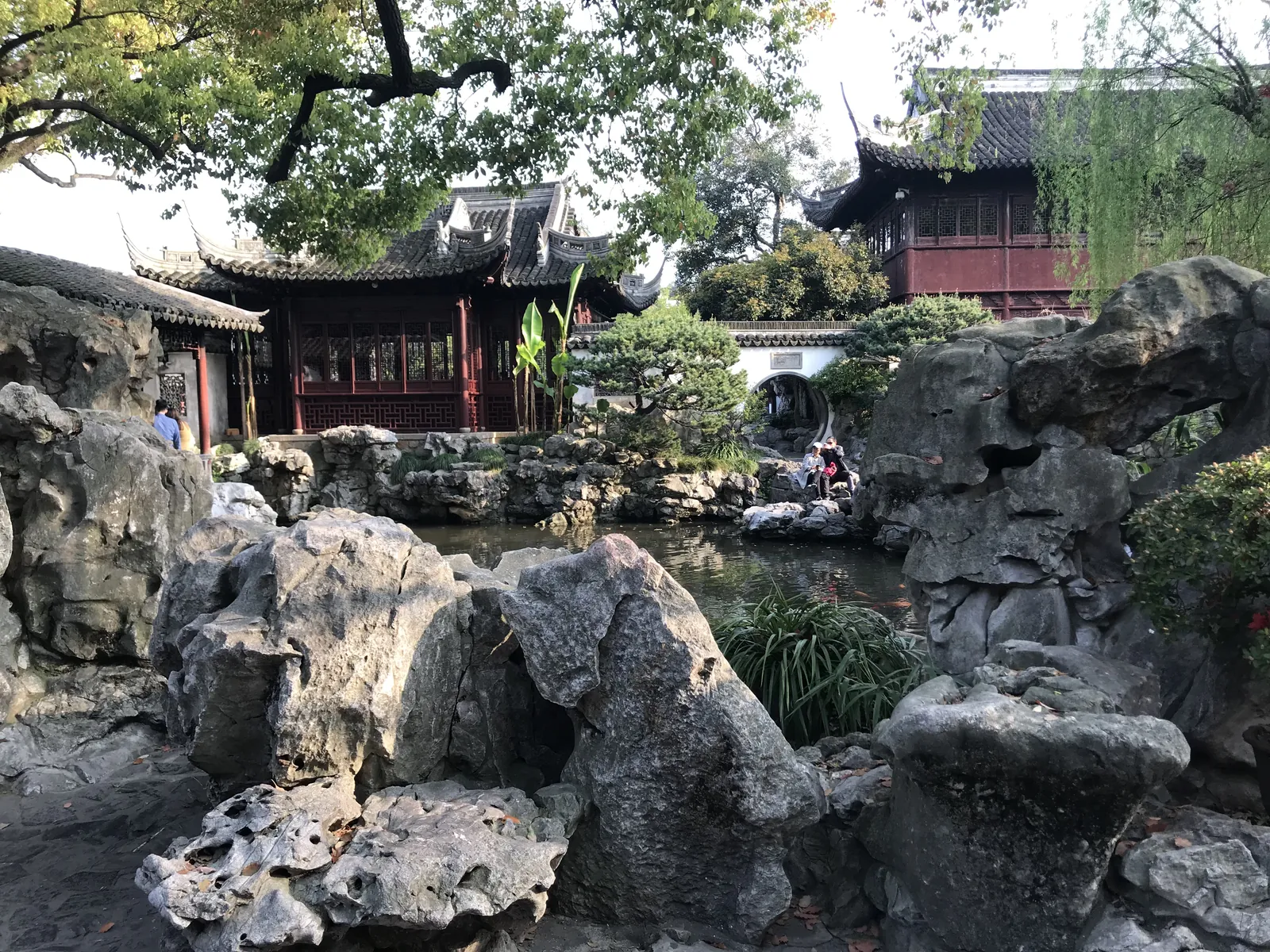
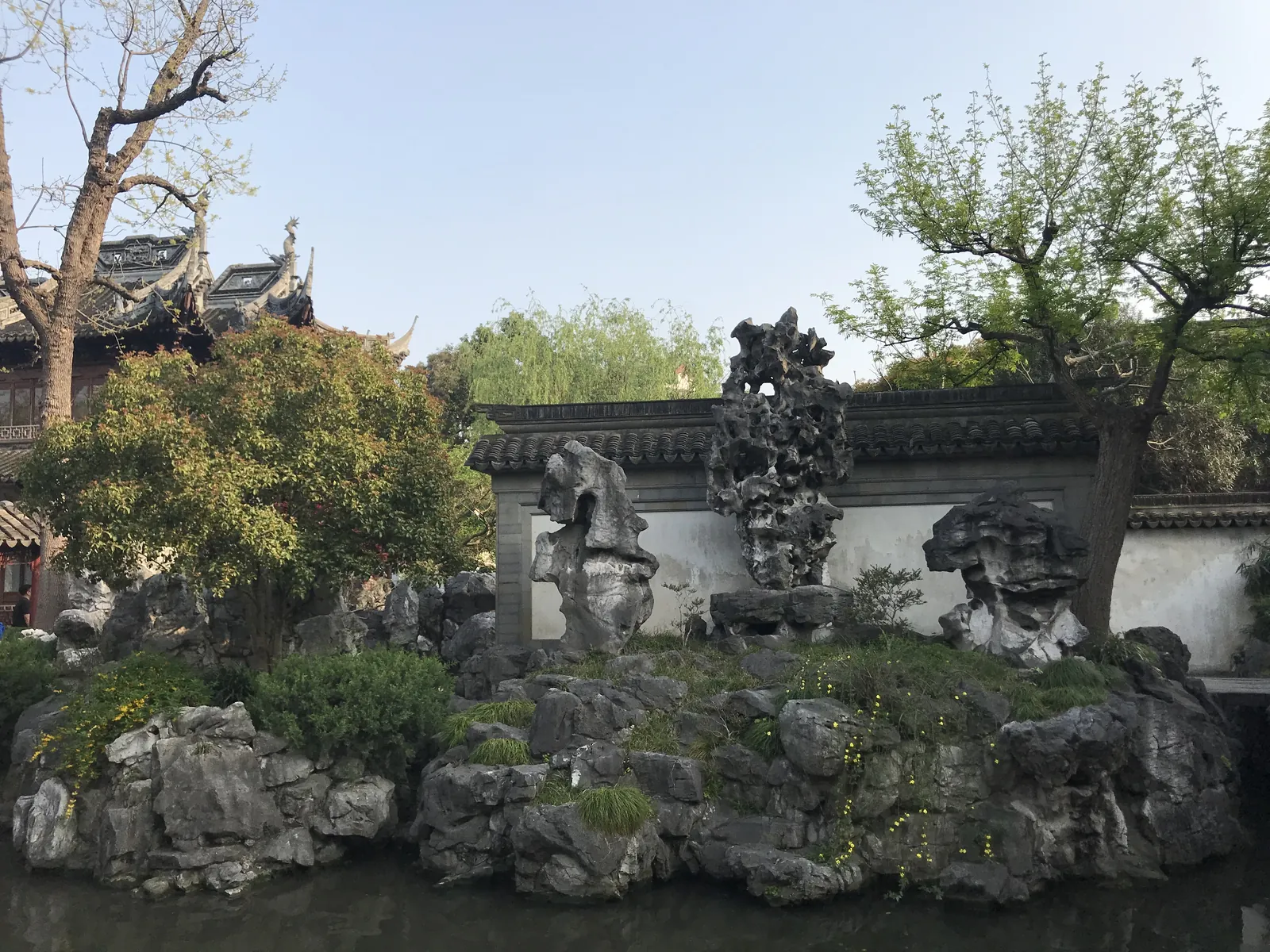
The garden is a Ming scholar-official’s estate, laid out in the sixteenth century by Pan Yunduan for his father and rebuilt many times since; today’s layout is largely twentieth-century restoration. Its skill is compressing landscape into a very small area: rockery of Taihu limestone, a winding pond edge, covered walkways hugging the walls, carved brick and timber detail, and the famous courtyard stone, the Exquisite Jade Rock. The circuit is short but dense.
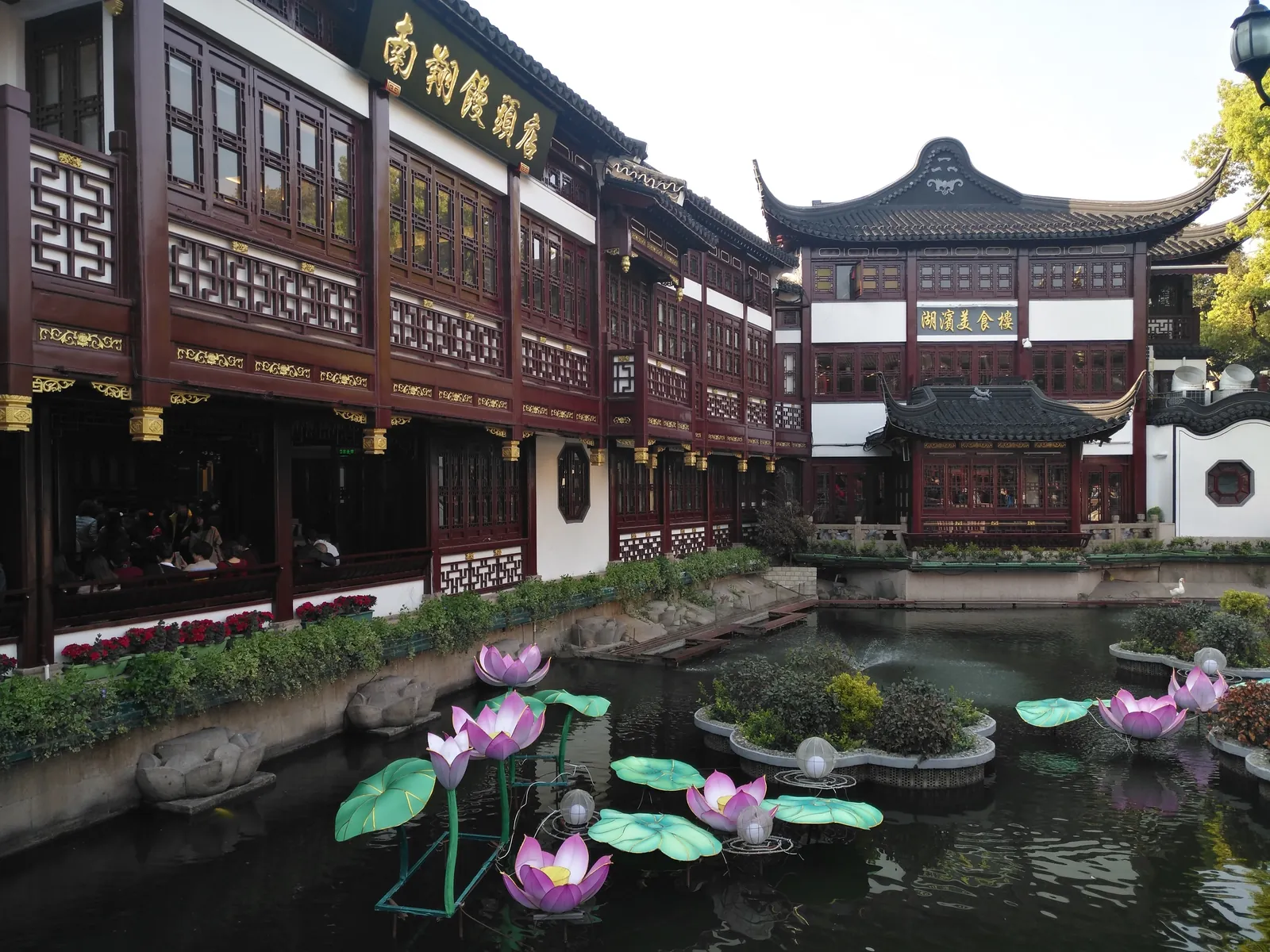
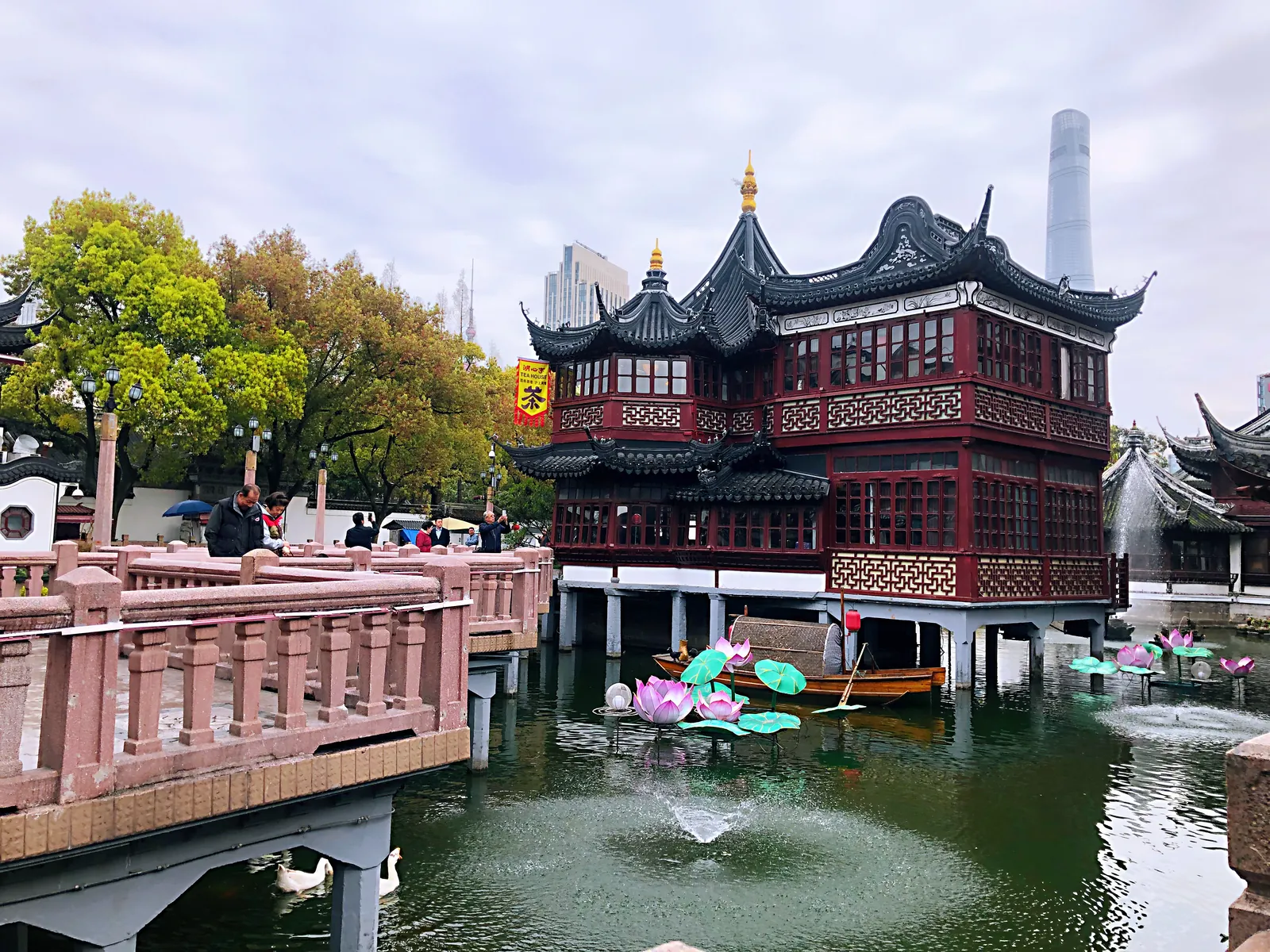
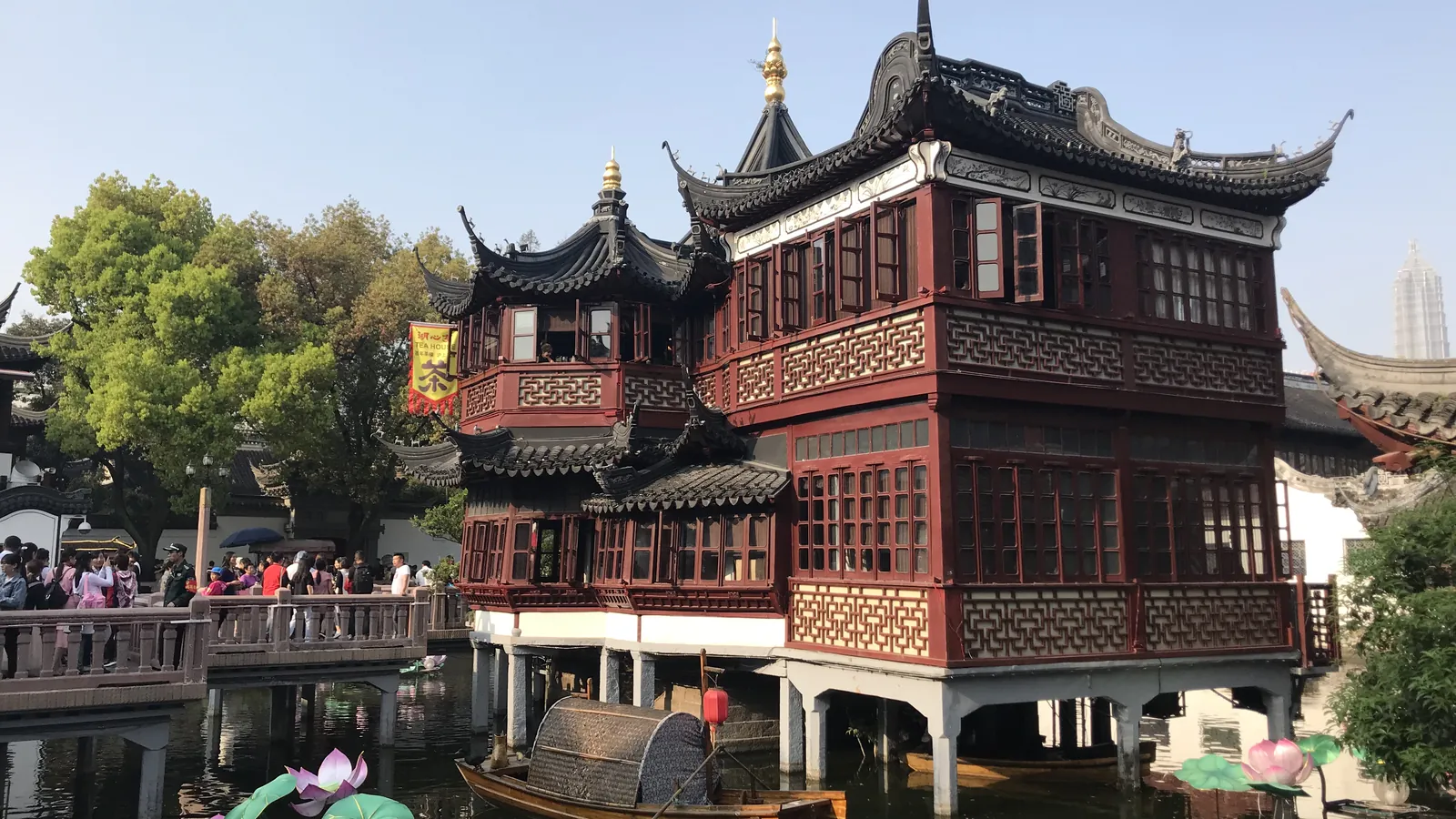
The bazaar is a ring of mock-antique commercial buildings raised around the garden, mostly in the 1990s, with the pond, zigzag bridge and teahouse at its centre. Everything here can be bought elsewhere, only more expensively. The photograph almost everyone takes of Yu Garden is outside the wall, in the free area: pavilions over water, the bridge, the Lujiazui towers behind. The City God Temple is an active Daoist temple beside the bazaar; entering the temple and walking the bazaar are separate things, and entry rules need confirming on the day.
Is the garden worth the ticket?
Yes, if you are interested in gardens as such. It is one of the few Ming literati gardens left in the city centre, and you are paying for the rockery, the pond edge, the lattice windows and a complete sequence: in through the gate, round the rockery, along the water, upstairs, then looking back. Quiet matters more than commentary.
It is not worth it in equally concrete cases. If all you want is the photograph of the pavilions on the water, that is taken outside the wall. If the old city is a shopping-and-snacking stop, the garden will take your freshest hour and give little back. If you have children who need room to run, the inner passages are narrow. And if Suzhou is on your itinerary, its gardens are greater in number and completeness; spend the ticket there instead.
The ticket is priced by peak and off-peak season, and at peak times and public holidays the garden normally limits numbers and sells by timed slot; the rules change yearly, so confirm the day’s arrangements through official channels. The garden also closes well before the bazaar quietens: what is lit at night is the bazaar, not the garden, so do not schedule it after evening sightseeing.
Timing, dates to avoid, and where the crowds jam
The garden has two clear windows: the stretch after opening, and the final hour before closing, the first quietest, the second best lit. Around midday the light is hard, the garden looks worse, and the crowds are heaviest. Light rain is underrated: the garden is nearly empty and the stone reads darker, though paving turns slippery.
The bazaar is open all day on a different rhythm. Shops open through the morning, when the lanes are still empty; eleven to four is the worst of it, hot and packed; after dark the lights come on and it looks its best and is at its most crowded. A weekday evening is usually still walkable.
Dates to avoid: weekends, public holidays, the first week of October, and the days around Lunar New Year. From the New Year through the Lantern Festival the bazaar stages a lantern fair; the fair is worth seeing, but it brings one-way flow and timed batch entry, which conflicts with a quiet look at the garden, so keep them on separate days.
Crowd behaviour is predictable. Jams collect at the zigzag bridge, narrow and one-way at peaks; the passage between the garden gate and the rockery; the front of the famous stone; the lanes between the bazaar’s shop rows; and the window queue at the best-known snack shop. Tour groups stop without warning, people stand mid-passage to photograph, and a queue forms at any recognised photo spot. So pick a direction and walk it to the end, do not stop mid-passage, step aside to photograph, treat the garden and the bazaar as separate walks, and follow on-site instructions during crowd control.
The old-city lanes outside the bazaar
The old city, laochengxiang, is the area inside the ring roads: the loop formed by Renmin Road and Zhonghua Road, curving because it sits on the line of the demolished city wall. Walk west or south from the garden exit and you are in the real old town, with no ticket and no crowd.
One route runs southwest: leave the busiest stretch of the bazaar along Fangbang Middle Road, head for Penglai Road and Laoximen, then towards the Confucian temple. Another runs south: Qiaojia Road, Tiandeng Lane, then Dajing Road for Dajing Pavilion and the surviving stretch of the Ming city wall, the best genuine piece of the old city outside the garden, being no reconstruction. The arrangements around the Confucian temple have shifted in recent years, so check on the day.
Be prepared: this district is a residential area being demolished and rebuilt at once, not a preserved Ming town. You will walk past new apartment towers, hoardings, cleared ground and old-style shopfronts still trading, which is the point. The lanes are narrow and full of scooters, so keep to the side and watch your feet; stretches close temporarily for construction. Continue south to Dongjiadu and you reach the river, where the old city ends.
What to eat nearby
Soup dumplings are the benchmark food here: thin-skinned, full of broth, eaten by biting a small hole first. The most famous shop has the longest queue, mostly at the ground-floor takeaway window, while going upstairs to order is faster; if you would rather not queue, the gap between it and an ordinary good shop nearby is smaller than the queue suggests. Pan-fried buns, rice-flour dumplings and flaky pastries are the same eat-as-you-walk category; pear syrup candy and spiced beans are takeaway souvenirs.
For a proper local meal there are long-established Shanghainese restaurants here: heavy on dark soy and sugar, braised dishes dominating, sweeter and oilier than visitors expect. Three or four dishes plus a soup is enough for three or four people; lunch beats dinner, and arriving before half past eleven or after one means less waiting.
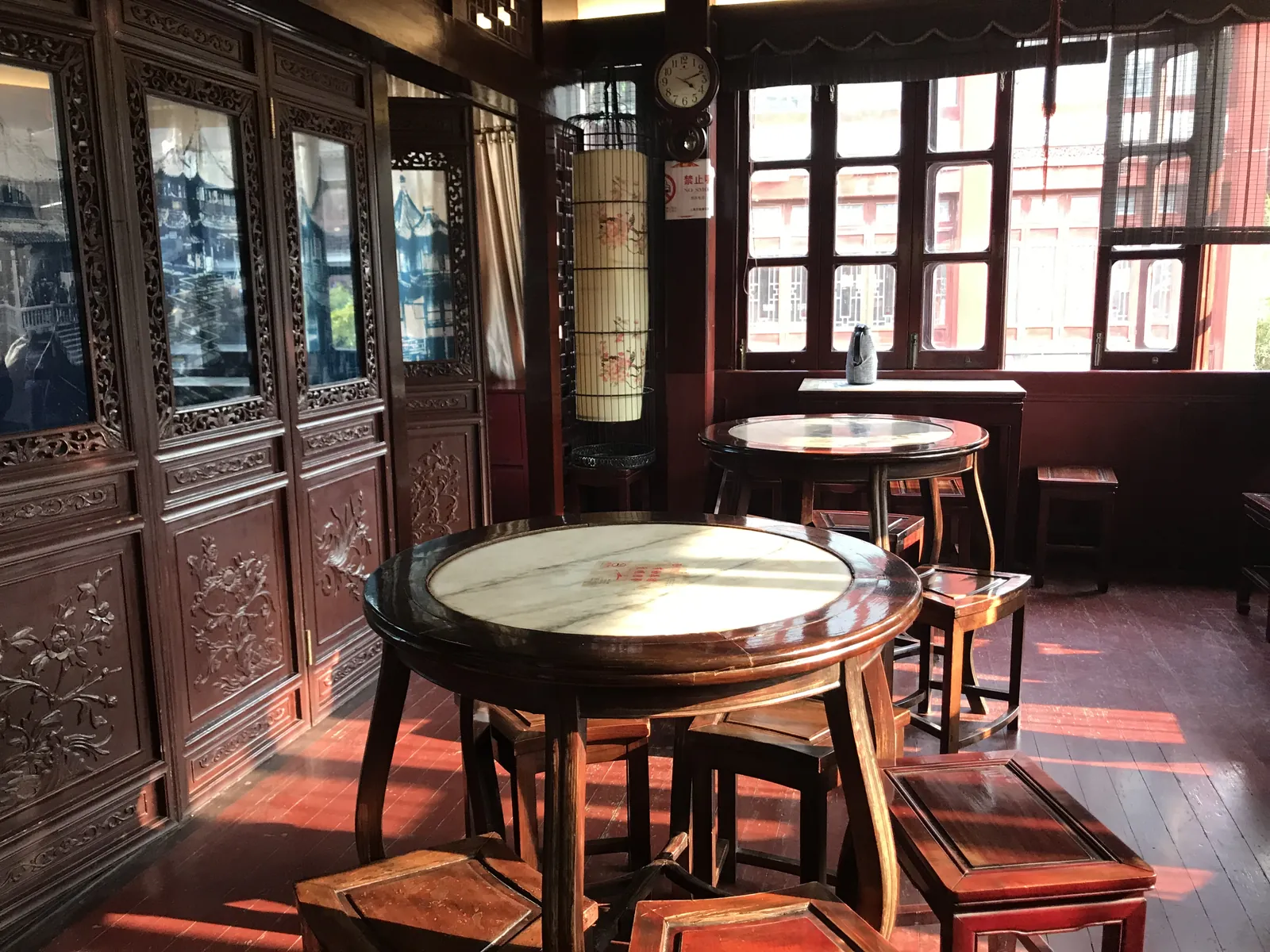
The teahouse on the pond sells its position rather than its tea: sitting over the water looking at the bridge and the pavilions is the whole reason to be there, the tea is ordinary, and prices are well above an ordinary teahouse. Pay for the view if you want it.
A more solid meal is found outside the bazaar: a few blocks towards Laoximen or Penglai Road, the same dishes are cooked for residents and priced more normally. Menus and hours vary by shop, so check the menu and the notice at the door.
What is overrated
First, the bazaar itself. Old Street sounds like a historic quarter but is a commercial stretch built in the 1990s; beyond the signboards and eaves it has nothing to do with how people live in the old city. Come for souvenirs and snacks and your expectations will be right.
Second, the queue at the famous shop: its length measures fame, not the difference in the food, and an hour on one steamer of dumplings is better given back to the garden or the lanes.
Third, the shops selling antiques, jade, calligraphy and paintings: aimed at visitors and priced like every scenic-area market in the country, so if you do not know the category, do not spend in them.
Fourth, the City God Temple as a temple. It is a working Daoist temple but small, with worshippers and visitors mixed together; most people experience the market around it rather than the temple.
Finally, the night view. The bazaar is handsome once the lights are on, but that is also its busiest hour; for a clean photograph, the lanes in the morning are easier than the lights at night.
Who it suits: anyone interested in gardens and architecture who will get up early for the quiet; anyone who wants to walk the fabric of the old city and does not mind crossing a demolition site; and anyone who only wants to eat and shop, since skipping the garden and doing the bazaar alone is a valid plan. Who it does not suit: anyone hoping one place will deliver all of Shanghai, anyone who dislikes walking, and anyone sensitive to crowds who comes at a weekend. A day here covers more ground than expected, so wear comfortable shoes.
place.gallery
Photographs