What to see
Jing'an Temple review: a working temple among the towers
Jing'an Temple reviewed: golden halls against glass towers are the real reason to come, plus what is inside, how long it takes, whether the fee pays, how to visit respectfully and who should skip it.
Last updated5 min read
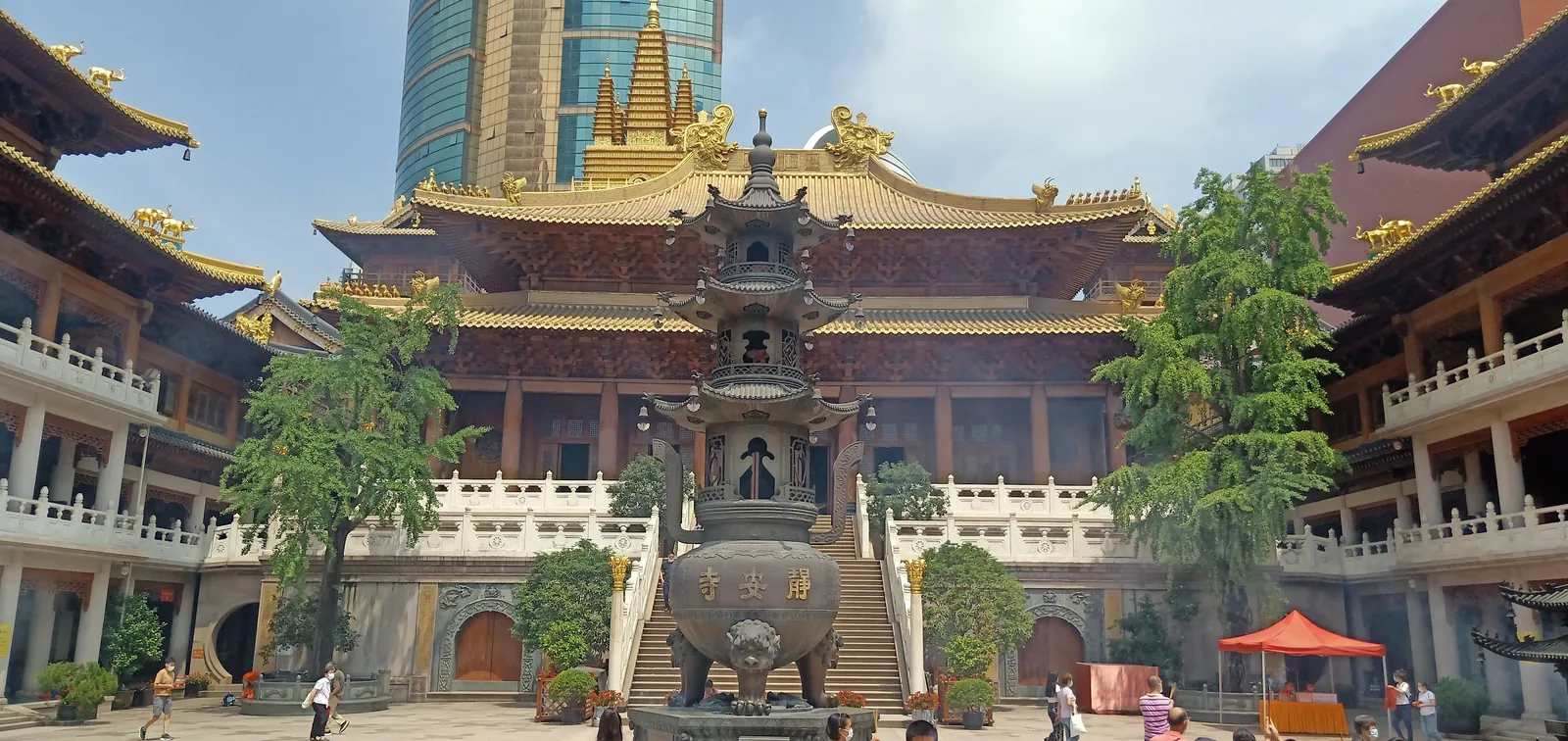
Jing’an Temple sits at the western end of Nanjing Road West, hemmed in by malls, offices and hotels. People come daily to offer incense, pray and chant: a working religious site, not a museum.
The contrast is the reason to come
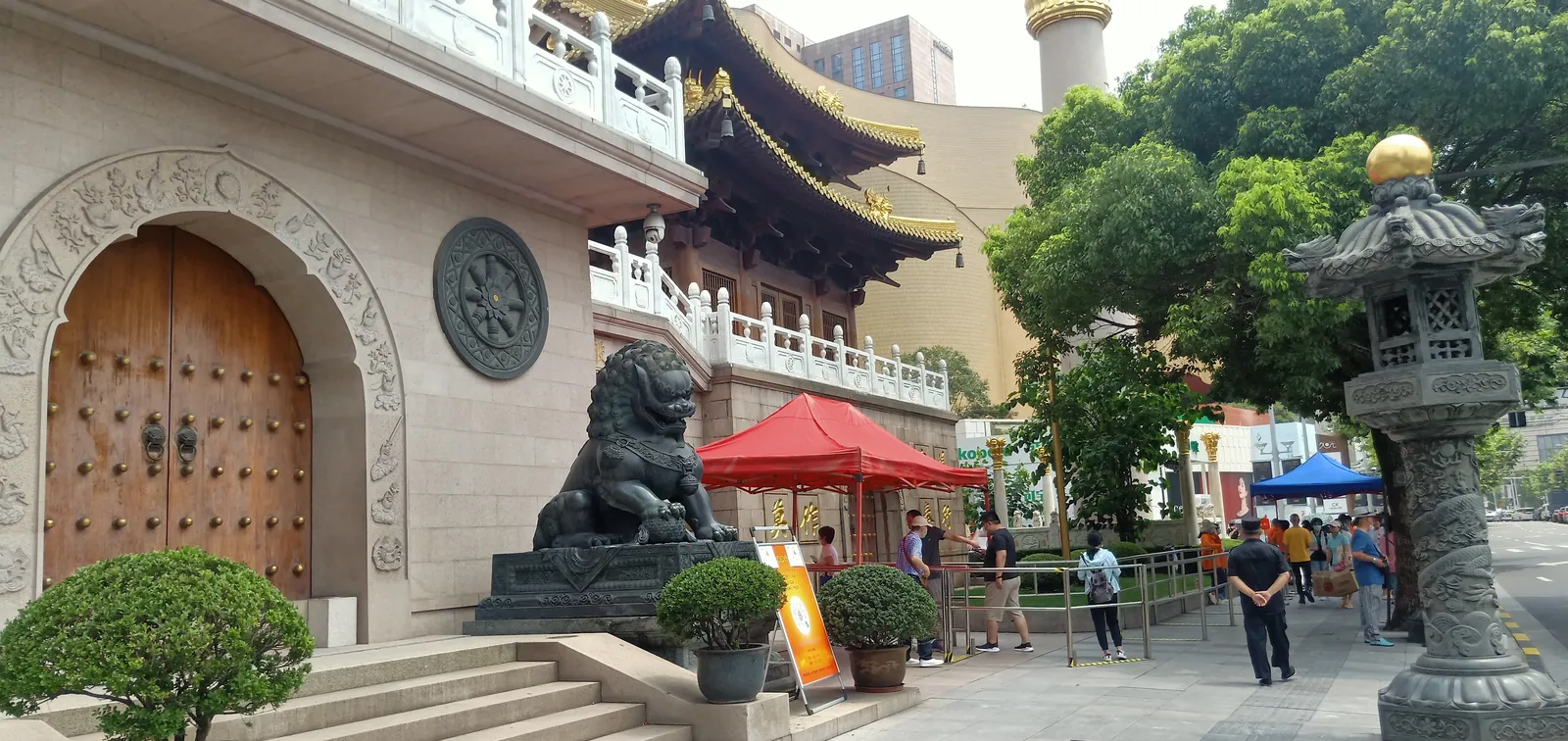
Stand in the courtyard and look up: above the golden double eaves of the main hall is a glass curtain wall, with almost no transition. This is how much of old Shanghai has survived — enclosed and still in use. The juxtaposition is the reason, not the size of the halls or the length of the history.
The temple’s name became a place name before the building became a sight: the district and the metro station are named after it. But it has been destroyed, rebuilt and moved site repeatedly, and today’s halls are largely reconstructions of recent decades. If your itinerary has no room for that juxtaposition, nothing else here fills the gap.
This is a working temple, not a sight
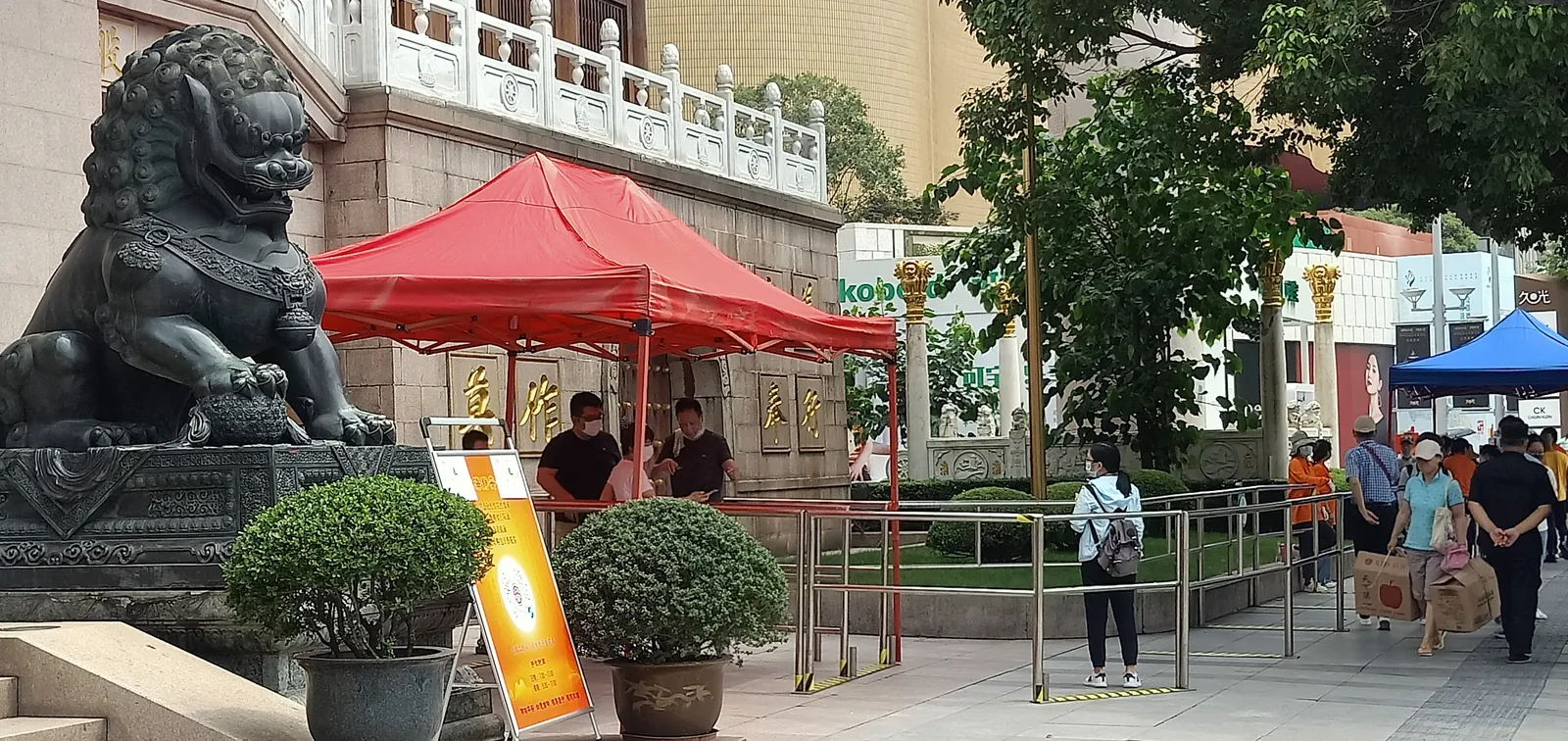
The nature of the place settles several things. Do not talk loudly in the halls, do not photograph the statues or anyone praying, and follow any no-photography notice. Do not stand in front of someone praying or block a passage with a camera. You will meet voluntary spending — incense, lamp offerings, donation boxes — and can walk past. There is no visitor route or panel-by-panel explanation: you are a guest in a place of worship.
The compound is small: a few halls along the central axis, the main hall raised on a stone platform with white balustrades and steps, side halls and walkways beside it, and a large censer in the courtyard with the temple’s name cast into its body. The detail repays attention — gold tiles, ridge beasts, painted beams, stone balustrades, inscribed boards and the trees before the halls. When the incense is heavy, smoke, chanting and camera shutters arrive at once. A circuit plus one or two halls takes forty-five minutes to an hour; sitting to watch the courtyard and read the boards ends at ninety. Admission arrangements change over time; confirm them at the gate on the day, as no figures are given here.
Is the entry fee worth it? The arithmetic of a small courtyard
Value depends on what you are buying. Treat the ticket as admission to a historic temple and the gap is wide — few halls, little ground, most people out within forty minutes. Treat it as the price of standing in the courtyard to see a golden roof meet a glass curtain wall and it pays, because few places show Shanghai that way.
Price, timed entry and free days must be confirmed on the day; none are quoted here. The saving is not the ticket but the planning: the temple sits beside a metro interchange on the same stretch as Nanjing Road West and Jing’an Park, so slotting it into a walk costs no extra time.
Crowds, commerce and the quiet you were expecting
Anyone hoping for quiet is most likely to be disappointed. The temple is at the station exit and the flow of people barely stops: tour groups, photographers, people hurrying through and people who came to pray, all in one small courtyard. The stretch just after opening is loosest; groups cluster from late morning into the afternoon; weekends, public holidays and Buddhist festival days are worst, when the courtyard moves at queue pace.
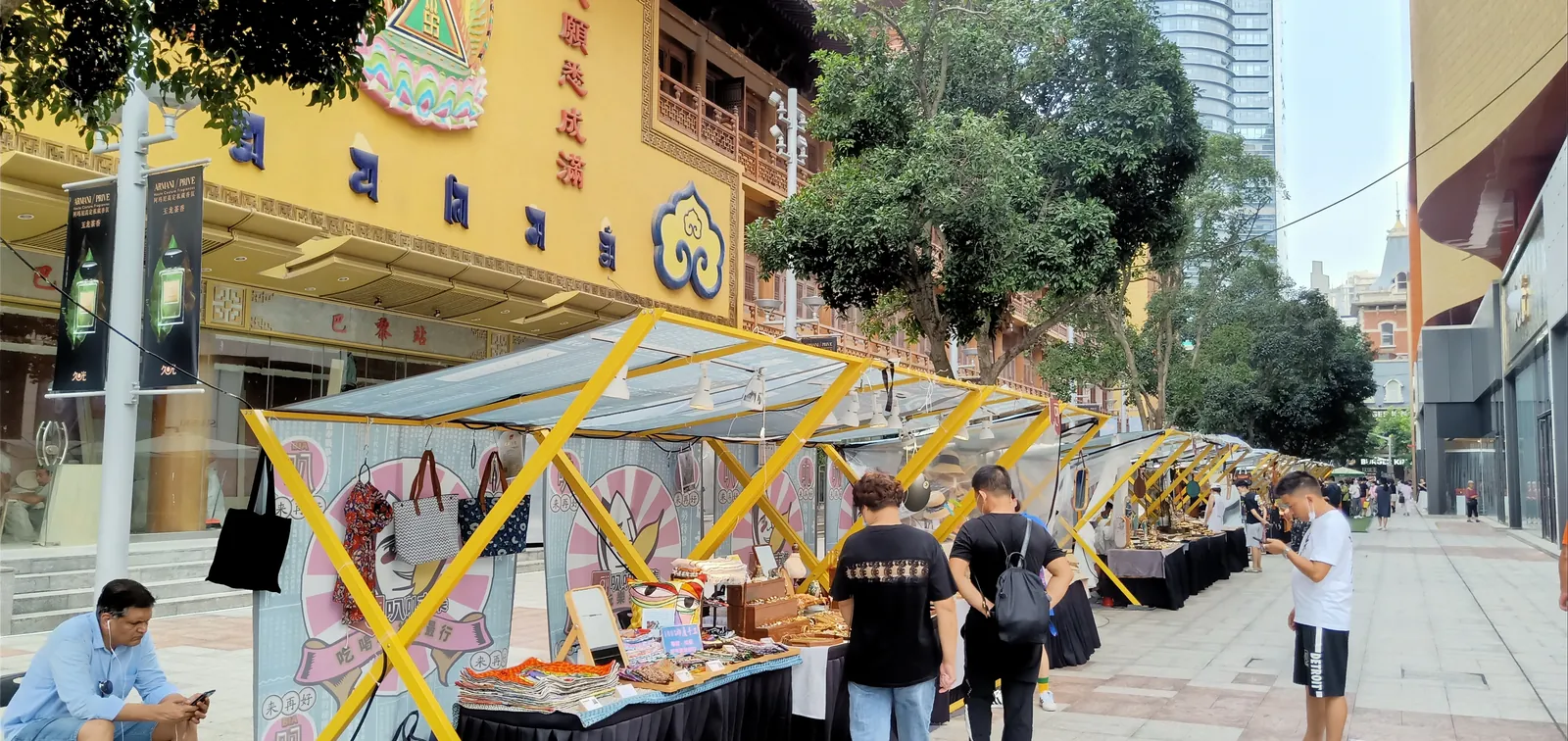
Commerce outside is heavy too: the gate opens onto a commercial street, festivals bring markets and installations, and stalls run far along it. Inside is no quieter — announcements, amplifiers, chanting and shutters at once. The temple is part of the city, not a place outside it. If you want bells, moss and almost nobody, this is not it; the where to stay guide calls Jing’an the same: commercial and busy late.
What to pair it with, who should come, who should not
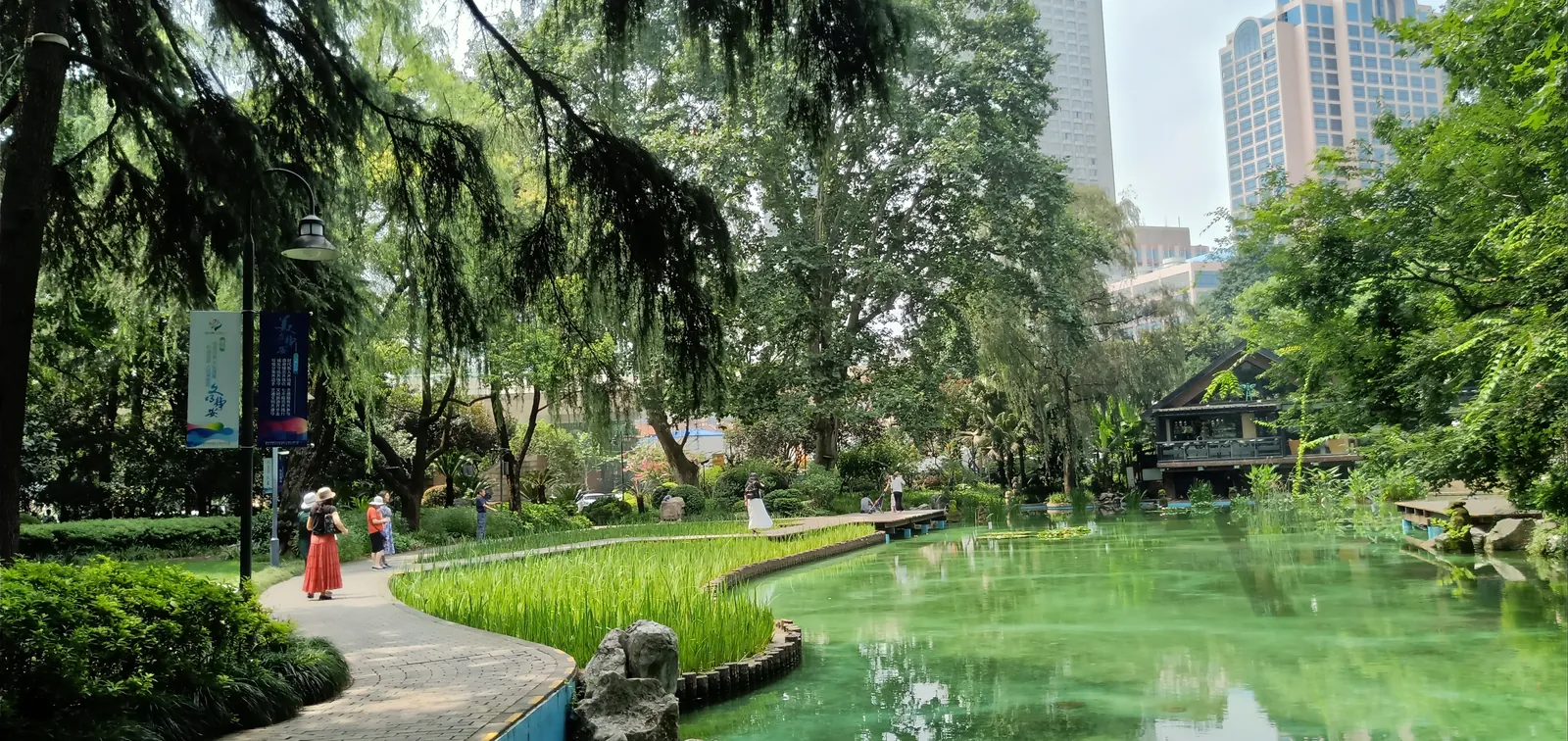
Three things pair naturally. Jing’an Park beside it, with shade, water and benches, is where you step out of the crowd. The high-end stores and malls east along Nanjing Road West combine well if you mean to shop, as the shopping guide describes. Walking west or south into the former French Concession’s plane-tree streets makes the temple the start of a walk rather than its destination. Jing’an Temple metro station is an interchange for Lines 2, 7 and 14, with an exit at the temple.
Who should come: anyone who wants old architecture and towers in one frame; a first-time visitor working out how this city treats its past; anyone already on Nanjing Road West who can drop in for half an hour to an hour. Who should not: anyone who wants quiet; anyone expecting a large temple to fill half a day; anyone uninterested in a religious site who only wants to photograph old buildings, since this is a working temple rather than a preserved specimen; and anyone who thinks one ticket for one small courtyard does not add up and is not passing by anyway — the street outside is not a wasted stop.
The verdict: worth one visit, and what is worth it is that juxtaposition and half an hour to an hour, not a deep visit. Fitted into a Nanjing Road West or Jing’an Park walk, yes; half a day and a cross-city trip for it alone, no.
Photographs