Food & drink
Benbang vs hangbang: how Shanghai's and Hangzhou's cooking differ
Both repertoires come from Jiangnan and both use soy, sugar and river fish; the difference is that benbang cooks flavour into the ingredient while hangbang keeps the ingredient's own flavour. Technique, sweetness, texture, river fish, defining dishes, and what to order in each city.
Last updated7 min read
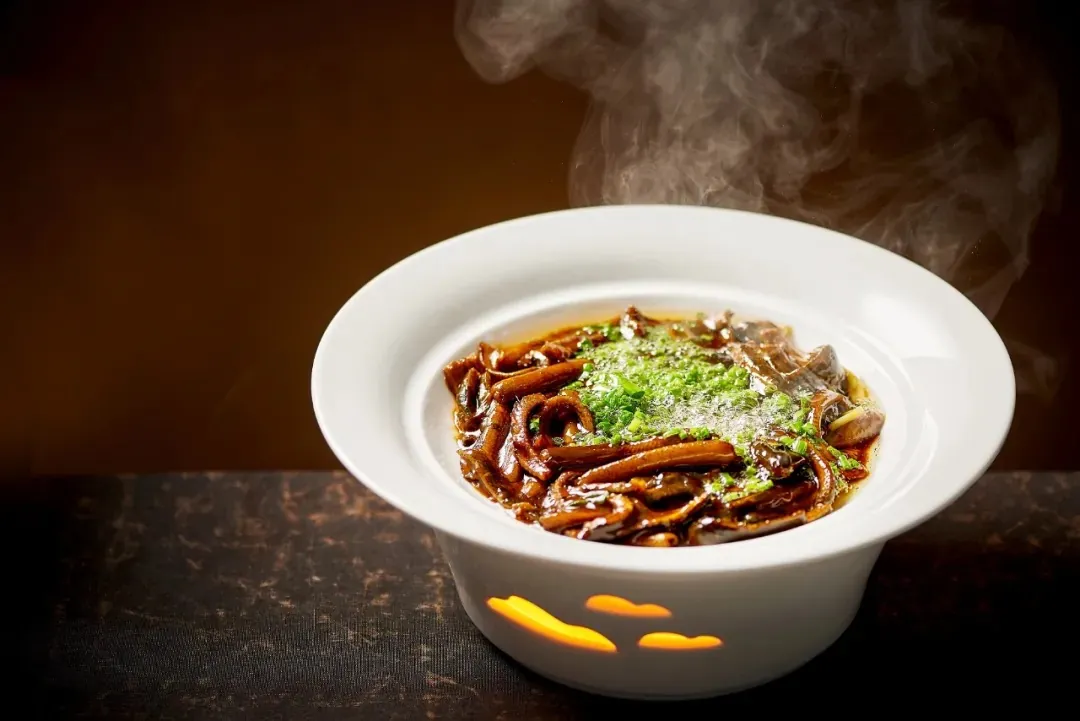
Benbang and hangbang both come from Jiangnan, both use soy sauce, sugar, rice wine and river fish, and in Shanghai they often share one menu. The default direction differs: benbang cooks flavour into the ingredient, hangbang keeps the ingredient’s own flavour. Knowing which way a kitchen leans is more useful than memorising a name.
What each tradition is
Benbang is Shanghai’s own line. The word comes from the bangkou, the trade groupings of the restaurant business after the city opened as a treaty port: local kitchens were benbang, while those from Suzhou, Wuxi, Ningbo, Hangzhou and Huizhou were the Su, Xi, Yong, Hang and Hui bangs. Its base is old-town home cooking — dark soy and plenty of sugar, savoury with a sweet edge, braising as the backbone, river fish ranked above sea fish. It did not set hard very long ago: it is what the city’s restaurant trade produced by tidying up and scaling up the neighbourhood repertoire, absorbing techniques from neighbouring cuisines as it went.
Hangbang is the Hangzhou line, part of the Zhejiang family, and belongs to the plain and water system around the city — West Lake, the Qiantang river, the Tiaoxi and the Hangjiahu lowlands — where lake and river fish, bamboo shoot, lotus root, water shield and salted greens are staples. It aims at clean freshness, crispness and original flavour; the words usually attached to it are clear, fragrant, crisp, tender, light, fresh. Cooking times are short, soups are clear, seasoning is restrained, and dark sauce seldom sits on top of the main ingredient.
Technique: dark soy and sugar against light and crisp
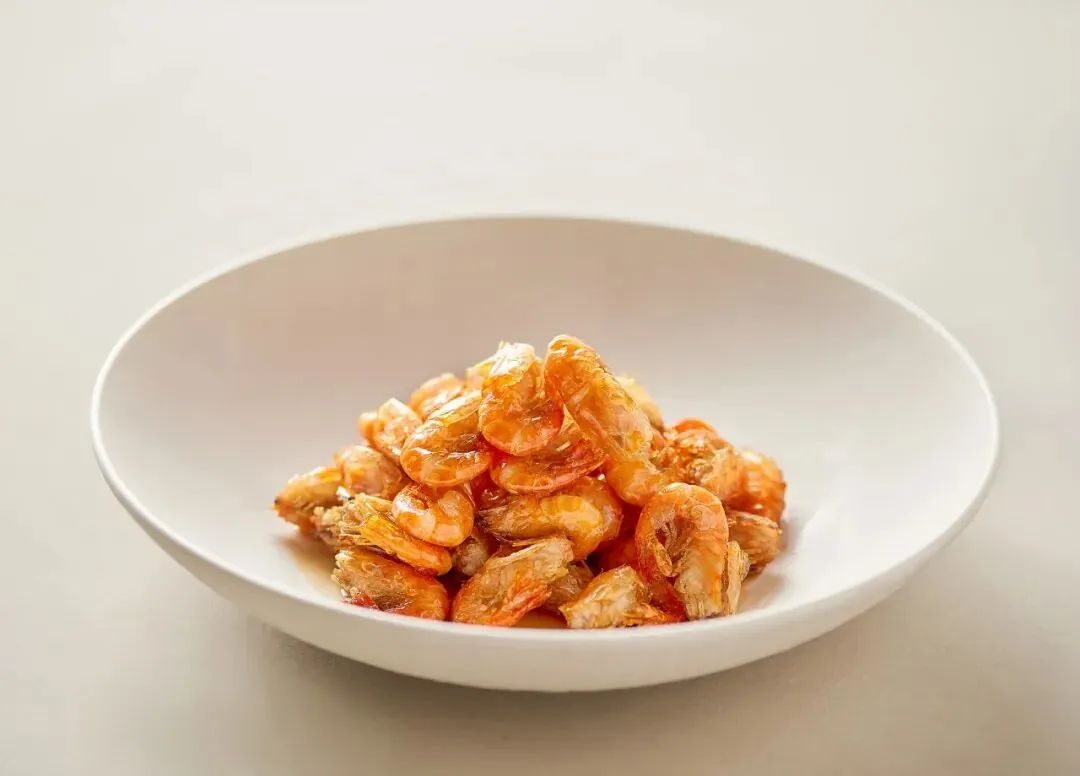
The core benbang techniques are braising and oil-bursting, both built on soy sauce and sugar. A braise means light soy for salt, dark soy for colour and sugar — often rock sugar — to reduce the liquid, cooked slowly until the sauce thickens and shines on what it coats. The sugar is not only sweetness: it gives the sauce body and gloss and rounds off the salt. Oil-bursting is a fierce quick fry, or frying prawn shells in hot oil and returning them to the pan in a sweet-savoury glaze, so the point is the crispness of the shell and the sweetness of the sauce. Brining in zao and wine-curing are the second line, commonest in summer, made with distillery lees, rice wine and spices and much lighter than a braise; their job is to open a gap between rich dishes.
The Hangzhou core is heat control, soup and speed. West Lake vinegar fish is a grass carp held just under boiling until barely done, then dressed with a sweet-sour starch sauce; Longjing prawns are river prawns slipped through a hot wok, carried by the prawn itself and a little tea fragrance. Broths and stews are the other half: Song Sao fish broth, or a duck slow-cooked in a clay pot, can take a long time and still taste clean, because the savour comes from ham, bamboo shoot, ginger and rice wine rather than dark sauce. Starch is used thinly, only so the liquid clings. Dongpo pork is the obvious exception — it too uses soy, sugar and long braising, and comes out dark, sweet and rich. Hangbang does not mean light; it means lighter dishes take up a larger share of the menu.
Sweetness, salt, texture, river fish
| Dimension | Benbang | Hangbang |
|---|---|---|
| Sweetness | Sauce-sweet: sugar and soy reduce together, and sweetness is one of the main beams of the flavour | Clean-sweet: sugar mostly lifts savour and balances sourness without covering the ingredient |
| Salt | From soy sauce, salt pork and zao brine; a heavier saltiness | From salt, ham, salted greens and dried bamboo shoot; a cleaner saltiness |
| Texture | Soft, tender, thick, clinging sauce, glossy | Tender, crisp, slippery, clean, soupier |
| River fish | Braised or oil-burst or wine-cured, richly seasoned, whole or in large pieces | Steamed, poached, dressed with vinegar, ginger and wine, for original flavour and very short cooking |
| Vegetables | Clover, baby greens, green vegetables, often stir-fried with meat fat or stock | Bamboo shoot, water shield, lotus root, wild rice stem, salted greens, chosen for the season and for crunch |
The river-fish row shows the split most clearly. In benbang cooking, black carp, river eel, rice-field eel, river prawns and crab mostly go the braised, oil-burst or zao-cured route: the seasoning is heavy, partly because freshwater fish carries a muddy note and partly because the local palate prefers depth. Hangbang pushes the same ingredients the other way. Grass carp becomes vinegar fish, river prawns are prized for tenderness, eel and prawns are fried together so that crispness and freshness are the point, and fish destined for broth has to give a clear soup with real flavour. Same larder, two directions: one thickens flavour with seasoning, the other thins it with heat.
The dishes that define each
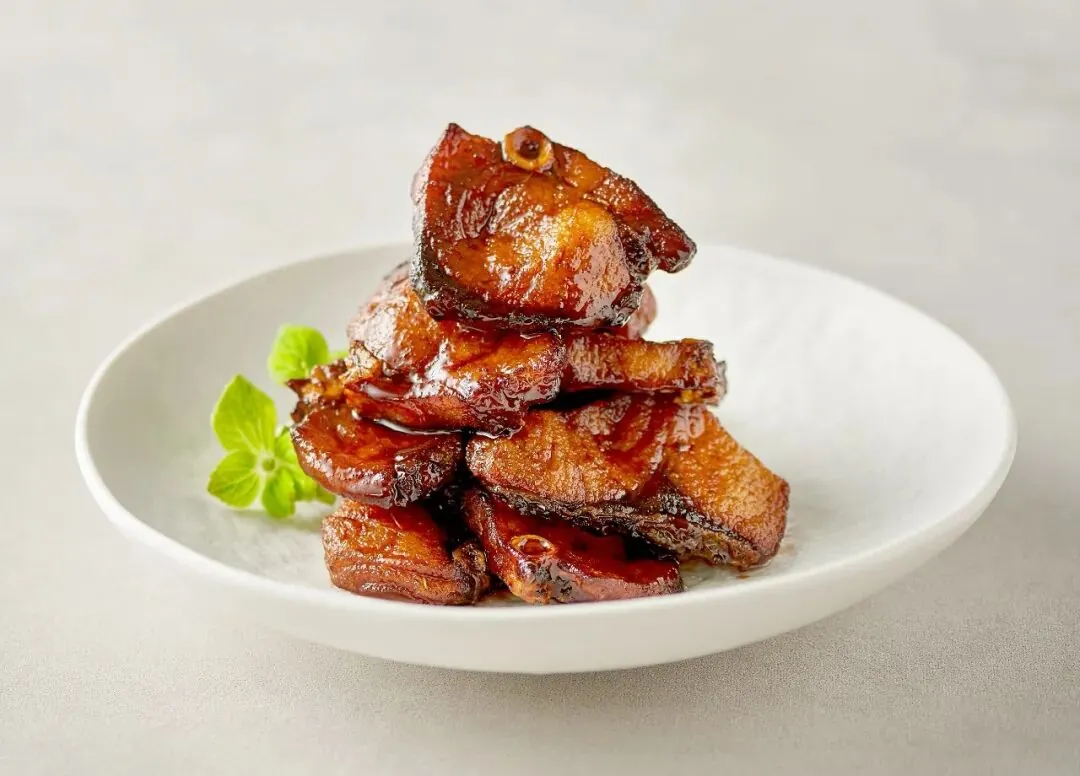
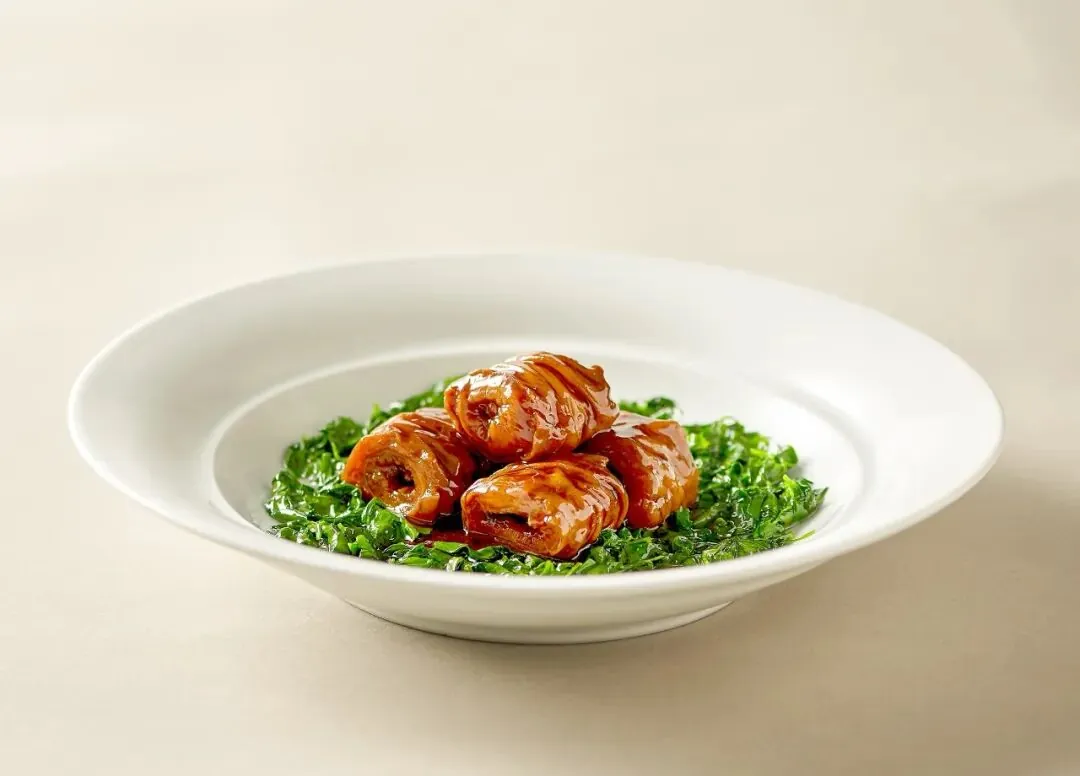
Benbang: red-braised pork, deep-fried prawns in a sweet soy glaze, pork intestine with clover, braised fish tail (the tail of a black carp), black carp liver, zao-cured beans and zao-cured chicken, salted pork and bamboo shoot soup, plainly stir-fried river prawns, sizzling eel; among the pastries, pan-fried pork buns, xiaolongbao and scallion oil noodles. Braises generally take up the largest block of the menu.
Hangbang: West Lake vinegar fish, Longjing prawns, Dongpo pork, beggar’s chicken, Song Sao fish broth, eel back with prawns, braised spring bamboo, zao-braised bamboo shoot tips, dried bamboo shoot and old duck clay pot, and pian er chuan, the noodle bowl with salted greens, bamboo and shredded pork; among the pastries, scallion-wrapped dough sticks and ding sheng cakes. Vinegar, bamboo, tea and ham turn up more often than soy sauce.
Side by side the overlap is obvious too: Dongpo pork and red-braised pork are the same family of technique, sizzling eel and eel back with prawns use the same fish, and beggar’s chicken and the benbang chicken dishes both depend on long, slow cooking. That overlap is the root of the confusion below.
Why they get confused, and what to order in each city
Three things cause it. First, the larder is nearly identical: river prawns, black carp, grass carp, eel, bamboo shoot, green vegetables, soy sauce, rice wine and sugar are standard at both ends of Jiangnan. Second, Shanghai restaurants often list benbang and hangbang dishes on one menu, old names open branches in each other’s cities, and dish names are borrowed in both directions. Third, a visitor eats the restaurant version rather than the home version, and restaurants sand the differences down: sugar pulled back on the benbang side, soy added on the hangbang side.
To judge which way a kitchen leans, three things beat the signboard: how much of the menu is braises, whether sugar always arrives tied to soy sauce, and whether river fish is braised or steamed and vinegar-dressed. Soup tells you too — benbang soup mostly separates one rich dish from the next, while a hangbang broth or thick soup is often a main dish in its own right.
What to order, by city:
- In Shanghai: one or two braises (red-braised pork, deep-fried prawns) and one plainly stir-fried green. For a lighter meal, swap the braises for zao-cured or wine-cured dishes, steamed dishes or plainly fried river prawns; river fish depends on the day’s supply, so ask after you sit down.
- In Hangzhou: a vinegar fish or a prawn dish, a seasonal bamboo or water shield dish and a soup; for something richer, add Dongpo pork or the old duck clay pot; order pian er chuan as the staple.
Honestly: both have changed, and the label is not the taste
Two things need saying. First, both traditions have modernised: lighter versions with less oil and sugar, banquet-style plating, the uniform standards of chain restaurants, and central kitchens and pre-prepared components have turned “benbang” and “hangbang” into menu categories in plenty of restaurants rather than descriptions of a kitchen. Second, the gap between restaurants is usually wider than the gap between the traditions — two benbang kitchens on the same street can differ more in sugar and oil than Shanghai and Hangzhou differ on average.
So the point of the distinction is not to label dishes but to work out what you want. For deep soy savour, salt and sweetness layered together and sauce that clings to rice, look towards benbang. For clean freshness, original flavour, crunch and broth, look towards hangbang. If you avoid sugar, watch fat or eat vegetarian, both need picking through, and hangbang is usually the easier place to pick.
If you simply want to know how to order a benbang meal, How to order Shanghai local food breaks the menu structure down; for ordering phrases, serving chopsticks and settling the bill, the food and etiquette guide goes into more detail. Hangbang food is not hard to find in Shanghai, and benbang food exists in Hangzhou too. The distinction tells you which direction to walk in, not which restaurant is better.
place.gallery
Photographs
Related reading
Food & drink
How to order Shanghai local food: a beginner's route through a benbang kitchen
A meal of benbang cooking in four moves: recognise the sweet-savoury style, build a menu of braise, river fish, greens and soup, then work out timing and seating. Lao Zhengxing is the worked example.
5 min read