Where to eat
Is Shanghai food really all sweet?
Not all of it, but benbang cooking does use far more sugar than most Chinese regional food: here sugar is a technique, used to hold down the saltiness of the soy, to give a braise its glaze and to round off sourness, so a properly made braise is sweet-savoury rather than sweet. The dishes that are genuinely sweet are smoked fish, sweet-and-sour ribs, red-braised pork, honey-glazed dishes and deep-fried prawns in a sweet soy glaze, while steamed fish, plainly fried river prawns, zao-brined and wine-cured dishes, stir-fried greens and most soups are not sweet at all. If you dislike sweet-savoury food, order fewer braises and more steamed and plainly stir-fried dishes, or choose another cuisine.
Last updated3 min read
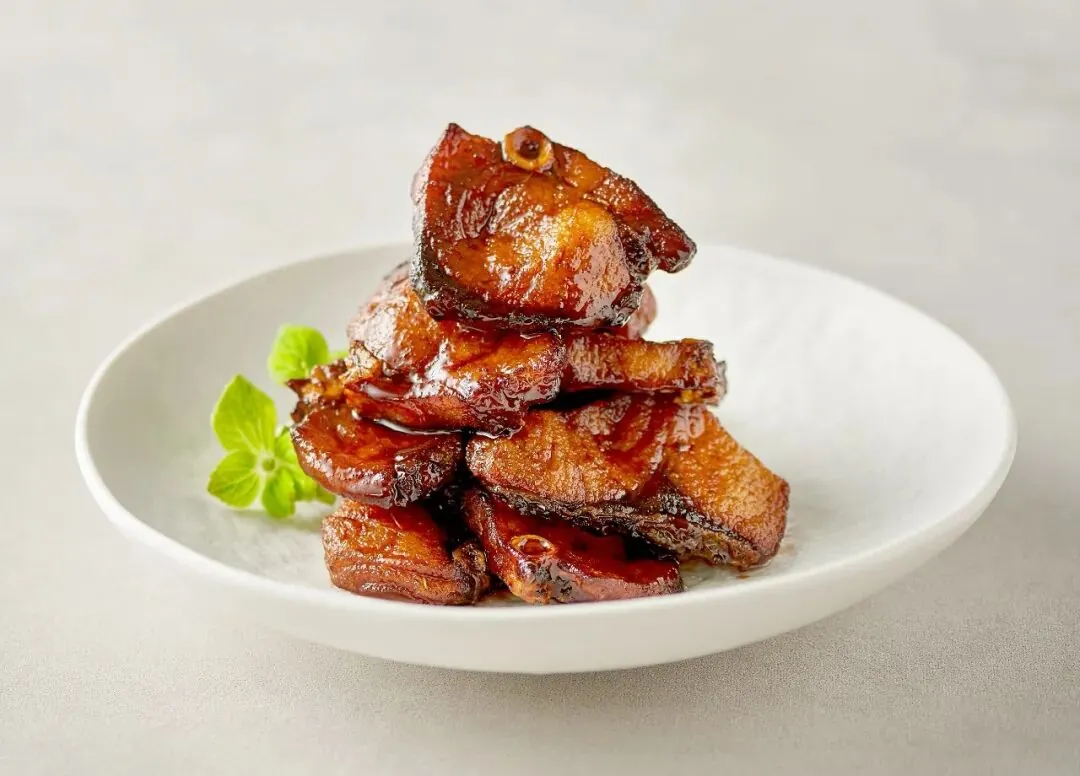
Benbang cooking uses enough sugar to register at the first mouthful: one bite of a braise may stop someone used to Cantonese, Sichuan or northern food. But ‘all sweet’ is wrong, and it makes people order badly.
The sugar is technique, not a dessert instinct
Benbang cooking really does use more sugar than most Chinese regional food, but the sugar is seasoning, not a dessert instinct. It does four jobs: it holds down the soy’s saltiness so it does not read flat; it gives a braise its glaze, thickening the sauce so it clings and shines; it rounds off the sharpness of vinegar and wine; and with gelatin it brings the sauce to the right consistency. A properly made braise is therefore sweet-savoury: the sweetness sits inside the salt, not on top of it. Treating sugar as this cuisine’s sweetener reverses the direction.
Which dishes are sweet, and which are not
To order around it, sort the menu into three piles.
- Sweetness leads: smoked fish, sweet-and-sour ribs, red-braised pork, honey-glazed dishes and deep-fried prawns in a sweet soy glaze — sweet at first bite, unavoidable if sweetness is not your taste.
- Sweetness in the background: sizzling eel, pork intestine with clover, braised river eel, braised fish tail, soy-braised duck and scallion oil noodles; sugar rounds off the salt without covering the soy or the ingredient.
- Not sweet at all: zao-brined dishes, wine-cured crab and prawns, steamed fish, plainly fried river prawns, plainly stir-fried greens, salted pork and bamboo shoot soup, autumn hairy crab with ginger and vinegar, and most soups — easily a whole table.
Benbang, Subang and Hangbang sit on different dials
Shanghai carries half the blame for other kitchens’ sugar. The Subang line of Suzhou and Wuxi goes further: Wuxi cooking is often called sweet at the front and salty at the finish, while benbang sweetness mostly stays under the soy. Hangbang pulls back, using sugar mainly to lift savour and balance vinegar, so dishes read clean and fresh. Visitors often remember a Suzhou meal as a Shanghai one, or eat in both cities and file the region as sweet. The gap is not small: benbang against hangbang sets out how both kitchens work.
What to order, what to drink, and the missing dessert
If you dislike sweetness, swap braises for zao-brined and wine-cured dishes, steamed dishes, stir-fries and soup, and take steamed fish or plainly fried river prawns. You can ask for less sugar, but that barely changes a braise reduced in advance; it works better on dishes cooked to order. For the real thing, order red-braised pork, deep-fried prawns and pork intestine with clover with plain rice: the sauce is the point, not a garnish.
The local table usually has hot tea, warm water or rice wine; sweet soft drinks are not the usual pairing with a braise, since sweet on sweet cloys. Dessert needs saying separately: a Chinese meal does not end with a sweet course, and none arrives unasked. Eight-treasure rice, lotus root stuffed with sweetened rice and fermented rice with small dumplings belong to the meal, to banquets and to festivals, not to a fixed final course.
If sweet-savoury food is not for you, benbang is the wrong cuisine, and that is no great loss: Cantonese and Teochew cooking leans on steaming, poaching and original flavour, hangbang is lighter, Sichuan and Hunan go for chilli instead of sugar, and hotpot, noodles and northwestern food are not built on sugar. Once you separate ‘sugar is a technique’ from ‘the dish is sweet’, how to order a benbang meal stops being a gamble.